"A convergence of independent data sets that resists conventional explanation."
Temporal, geographic, mathematical, and architectural evidence from ancient civilizations worldwide, examined for patterns of convergence that exceed what independent development models predict.
Four independent lines of evidence—temporal, geographic, mathematical, and physical—examined for patterns that exceed the explanatory capacity of independent development, cultural diffusion, or coincidence alone.
Between approximately 10,000 and 3,000 BCE, complex civilizations emerged across multiple continents within a relatively compressed timeframe. Each developed sophisticated mathematics, astronomy, writing systems, and monumental architecture. While precursor cultures have been identified for most (Ubaid for Sumer, Naqada for Egypt, Mehrgarh for the Indus Valley), the rate of development and the convergence of specific technical knowledge domains—particularly in astronomy and monumental construction—present questions that gradualist models have not fully resolved.
T-shaped pillars up to 20 tons with carved reliefs and astronomical alignments. Pre-dates agriculture and pottery (Schmidt, 2010). Antecedents exist in Natufian culture, but the scale remains anomalous.
Constructed during Younger Dryas transition
Cuneiform writing, sexagesimal mathematics, systematic astronomy, the wheel, and bronze metallurgy. Preceded by Ubaid culture, but the convergence of innovations remains rapid (Postgate, 1992).
Flood recorded in Atrahasis & Gilgamesh
Hieroglyphic writing, monumental stone architecture, mummification, and precise astronomical knowledge appear within the Early Dynastic period. Naqada III precursors are documented but the transition is compressed.
“Zep Tepi” tradition — the First Time
Standardized urban planning, uniform weights and measures, advanced hydraulic engineering. Preceded by Mehrgarh (c. 7000 BCE), but mature phase urban complexity is disproportionate (Kenoyer, 1998).
Manu flood narrative in the Shatapatha Brahmana
Writing, medicine, astronomy, and silk production attributed to the Yellow Emperor period. Preceded by Yangshao and Longshan cultures, but the legendary chronology compresses major innovations (Chang, 1986).
Gun-Yu flood narrative in the Shujing
Olmec/Maya traditions develop the Long Count calendar, pyramid construction, and advanced positional astronomy independently of Old World models — a convergence that remains one of the central puzzles of comparative archaeology.
Popol Vuh records cyclical destructions by flood
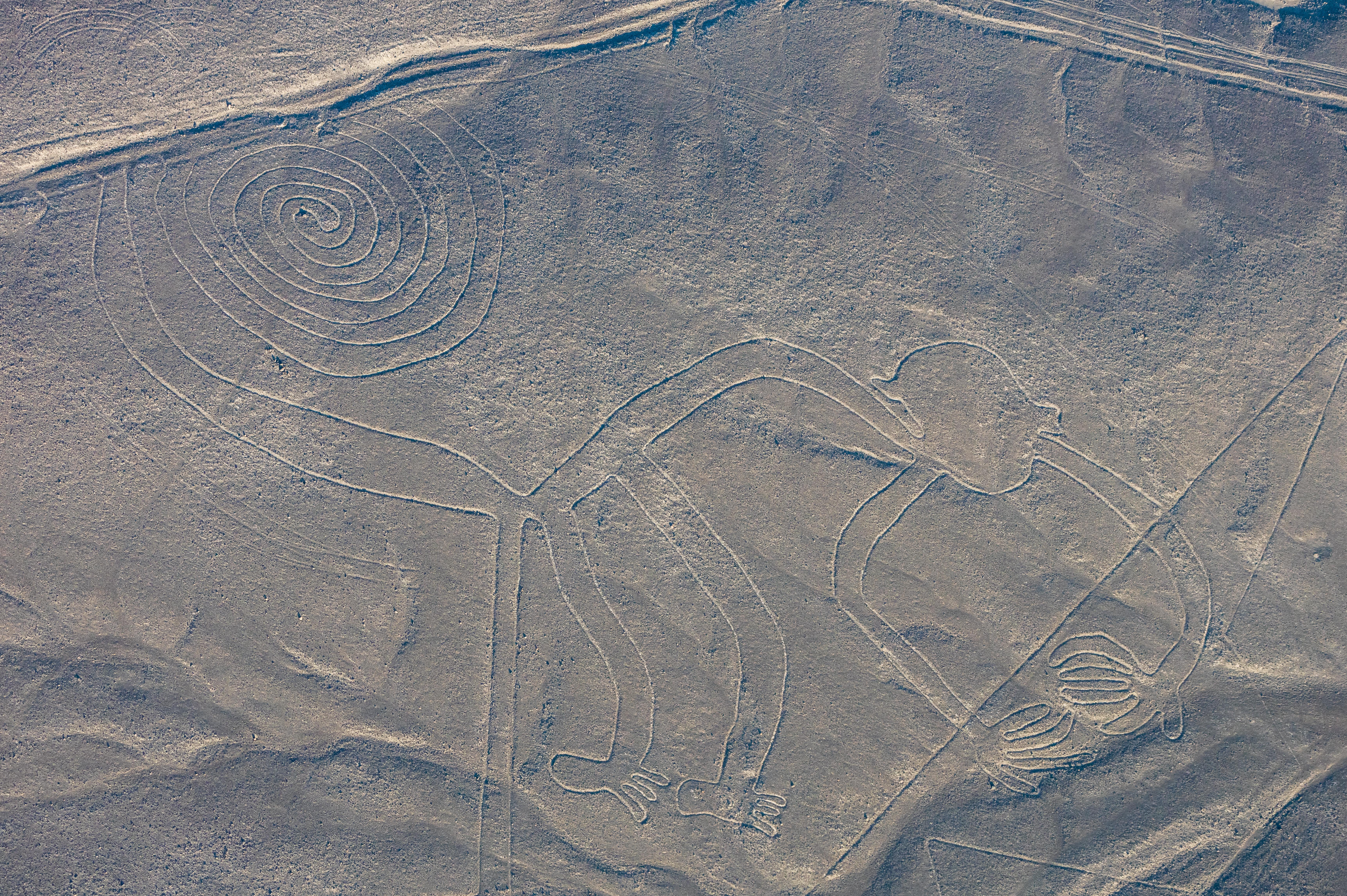
Recurring symbols, mathematical ratios (phi, pi), and construction techniques—including polygonal masonry with precision-fitted irregular blocks—appear across Egypt, Peru, India, China, and Mesoamerica. Ancient trade networks (lapis lazuli routes, obsidian exchange, Austronesian expansion) document some degree of long-distance contact. The question is whether these networks adequately explain the depth and specificity of shared mathematical and astronomical knowledge, or whether the convergence suggests a more systematic transmission mechanism.
Egypt, Persia, Mesopotamia, Mesoamerica
Egypt, China, India, Turkey
Egypt, Mexico, China, Sudan, Indonesia
Every ancient culture worldwide
Sumeria, Egypt, India, Aztec
Stonehenge, Gobekli Tepe, Nazca
A specific set of numbers—72, 144, 432, 25,920—recurs across Egyptian, Vedic, Norse, Babylonian, and Mesoamerican traditions. De Santillana and von Dechend documented this pattern extensively in Hamlet's Mill (1969), arguing that these numbers encode knowledge of Earth's axial precession: a 25,920-year cycle requiring centuries of sustained astronomical observation to measure. Whether this knowledge was independently derived, transmitted from a common source, or encoded through a mechanism not yet understood remains an open question in archaeoastronomy. (For the mathematical framework connecting these constants to geometric resonance in built structures, see Architectural Energetics, Vol. 3: Sacred Geometry, particularly Chapters 9–10 on precessional encoding and geometric resonance patterns.)
Years for 1° of precessional shift. Appears in: 72 conspirators against Osiris (Plutarch, De Iside), 72 names of God (Kabbalistic tradition), 72 stupas at Borobudur (9th c. Java).
432,000 years of Kali Yuga (Surya Siddhanta). 432,000 Einherjar in Valhalla (Prose Edda). The sun's radius: 432,000 miles (within 0.16% of measured value). 72 × 6 = 432.
Complete precessional cycle (modern value: 25,772 years). The Great Pyramid's height at 43,200:1 scale approximates Earth's polar radius (Petrie, 1883). 72 × 360 = 25,920.
All precessional numbers reduce to 9 by iterated digit summation: 7+2=9, 4+3+2=9, 2+5+9+2+0=18→9. This is a mathematical property of multiples of 9, not evidence of intention per se—but its prevalence in mythological numerology warrants examination.
A recent peer-reviewed paper offers a theoretical framework that connects geometric precision to fundamental physics. In March 2026, White, Vera, Sylvester, and Dudzinski published “Emergent quantization from a dynamic vacuum” in Physical Review Research (8, 013264). The paper demonstrates that quantized energy states—the discrete orbital structure of hydrogen—emerge from wave propagation in a dispersive acoustic medium when specific geometric boundary conditions and symmetries are imposed. No quantum-mechanical postulates beyond symmetry and self-adjointness are required.
The implications for archaeoastronomy are not addressed in the paper itself, but they are worth noting. If the vacuum of space behaves as a dispersive medium—and if geometric boundary conditions determine which resonant modes are permitted—then structures built to precise geometric specifications are not merely symbolic. They may interact with physical properties of space-time in ways that formal physics is only now formalizing. The ancient builders' empirical emphasis on proportion, orientation, and acoustic properties of stone takes on a different character in this light.
This does not prove that ancient builders understood vacuum acoustics. It establishes that the physics they may have been engaging with empirically—through resonance, proportion, and boundary conditions—has a formal theoretical basis in published, peer-reviewed research. The data in this section is the architectural evidence. The White et al. paper is a candidate mechanism.
The preceding chapters document four categories of evidence: temporal compression of civilizational development, geographic recurrence of symbols and techniques, mathematical constants embedded across unrelated mythological traditions, and architectural precision that exceeds the explanatory capacity of documented Bronze Age technology. Each category, taken individually, admits conventional explanations—coincidence, convergent development, trade diffusion. The question is whether these explanations remain sufficient when the categories are considered together.
The mainstream counter-arguments deserve honest enumeration. Convergent development—the independent invention of similar solutions to similar problems—explains pyramidal structures (structurally optimal for monumental construction), some symbolic motifs (circles, spirals), and flood memories (most early civilizations occupied flood-prone river valleys). Trade diffusion accounts for some material and symbolic exchange. Jungian archetypes may explain recurring mythological structures.
What these explanations do not fully address is the specificity of the convergence: not just pyramids, but pyramids with astronomical alignments encoding precessional constants. Not just flood myths, but flood myths with identical narrative structure. Not just geometry, but the same mathematical ratios to multiple decimal places. The question is not whether any individual data point can be explained. It is whether the aggregate can. (Architectural Energetics, Vol. 4: Historical Evidence surveys these convergences across 10 chapters of primary-source analysis; Vol. 5: Case Studies applies measurement methodology to individual structures including Giza, Göbekli Tepe, and Chartres.)
"The convergence of temporal, geographic, mathematical, and narrative evidence across ancient civilizations constitutes an open problem in comparative archaeology. The data presented here does not prove a single explanation—but it demonstrates that the question itself is legitimate, grounded in measurable evidence, and deserving of continued rigorous investigation."
Proceed to Pillar III: The Continuity