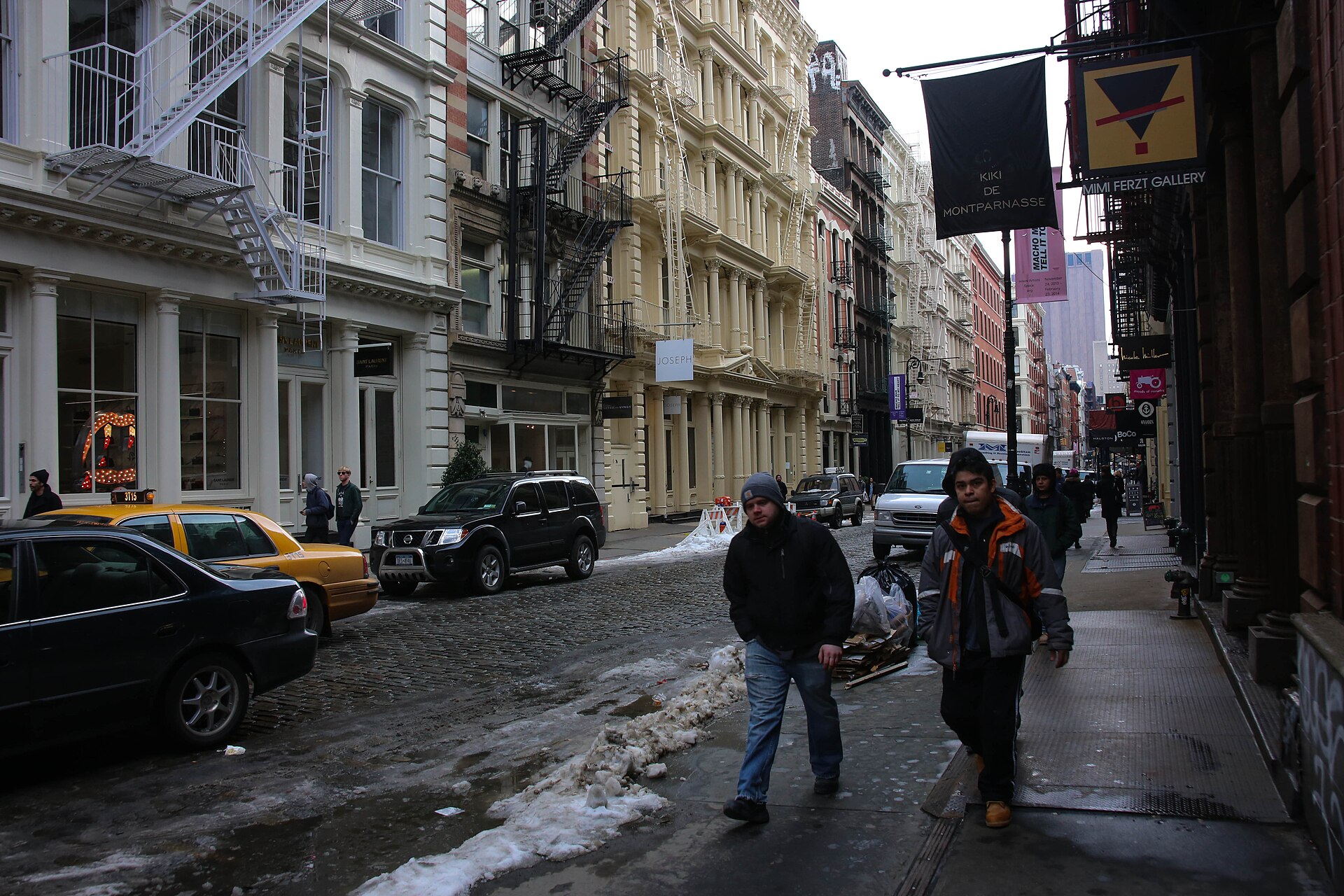
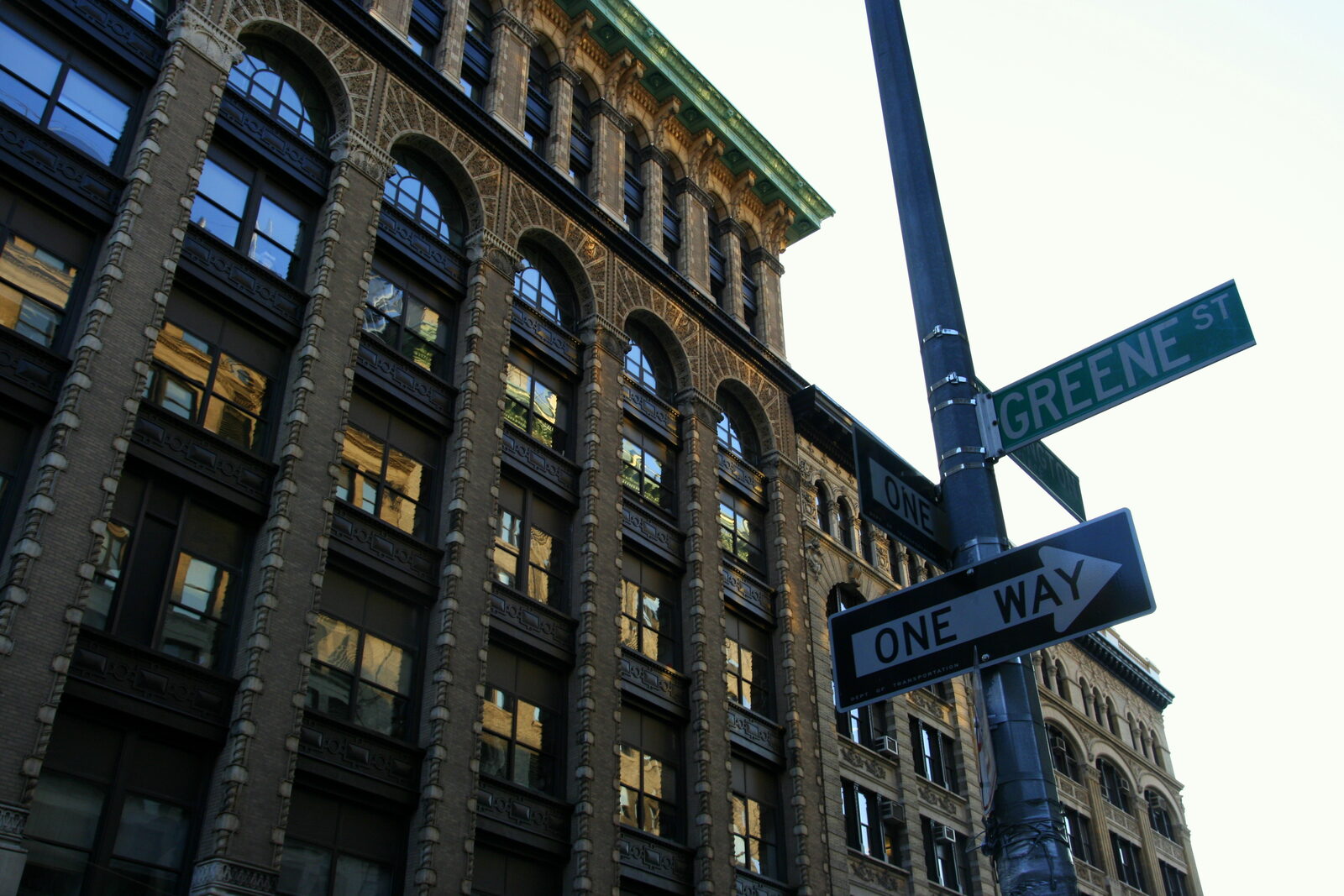
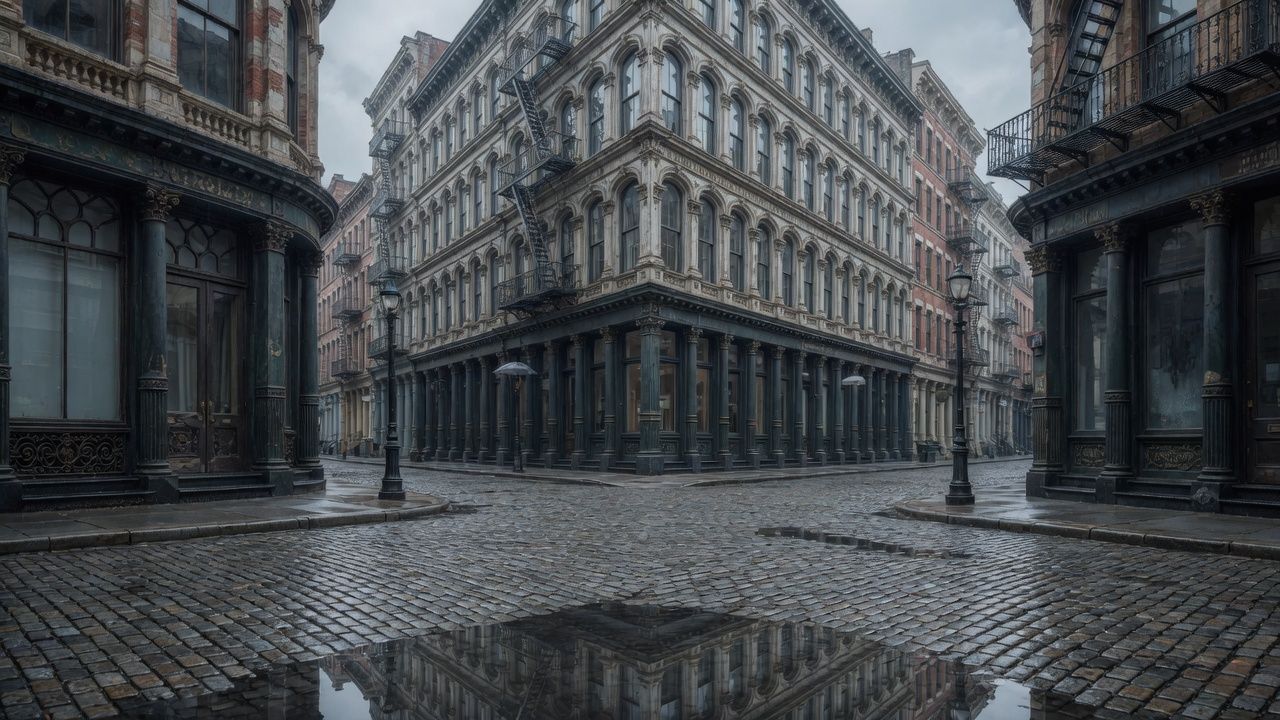
Twenty-six blocks between Houston and Canal.
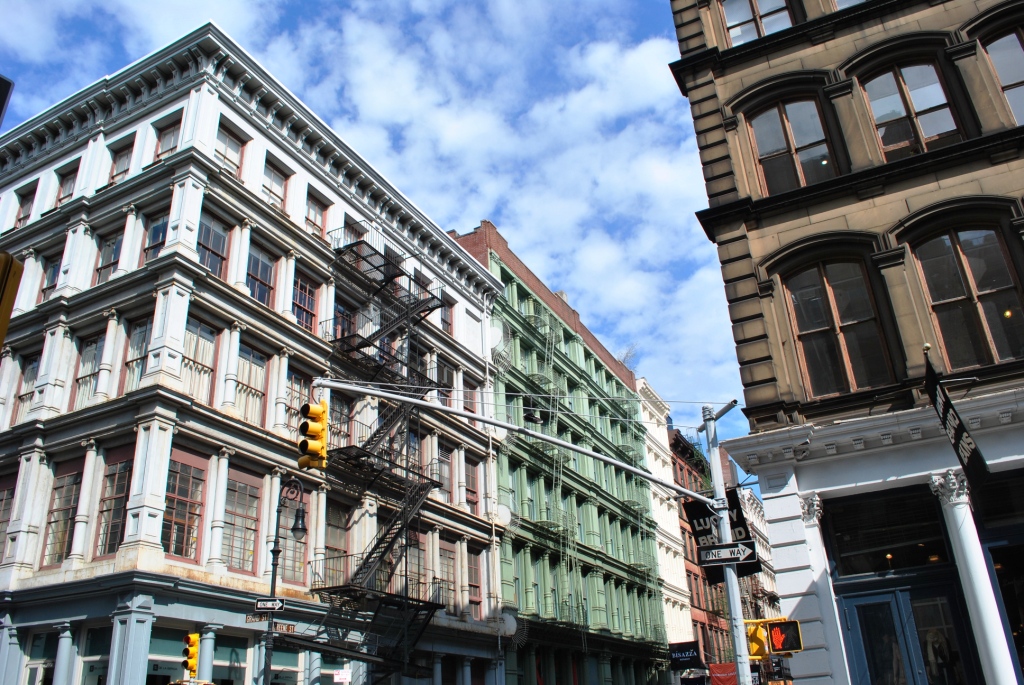
Cobblestones. Fire escapes. Corinthian columns cast from molds.
SoHo Cast Iron Historic District
Twenty-six blocks between Houston and Canal.
Cobblestones. Fire escapes. Corinthian columns cast from molds.
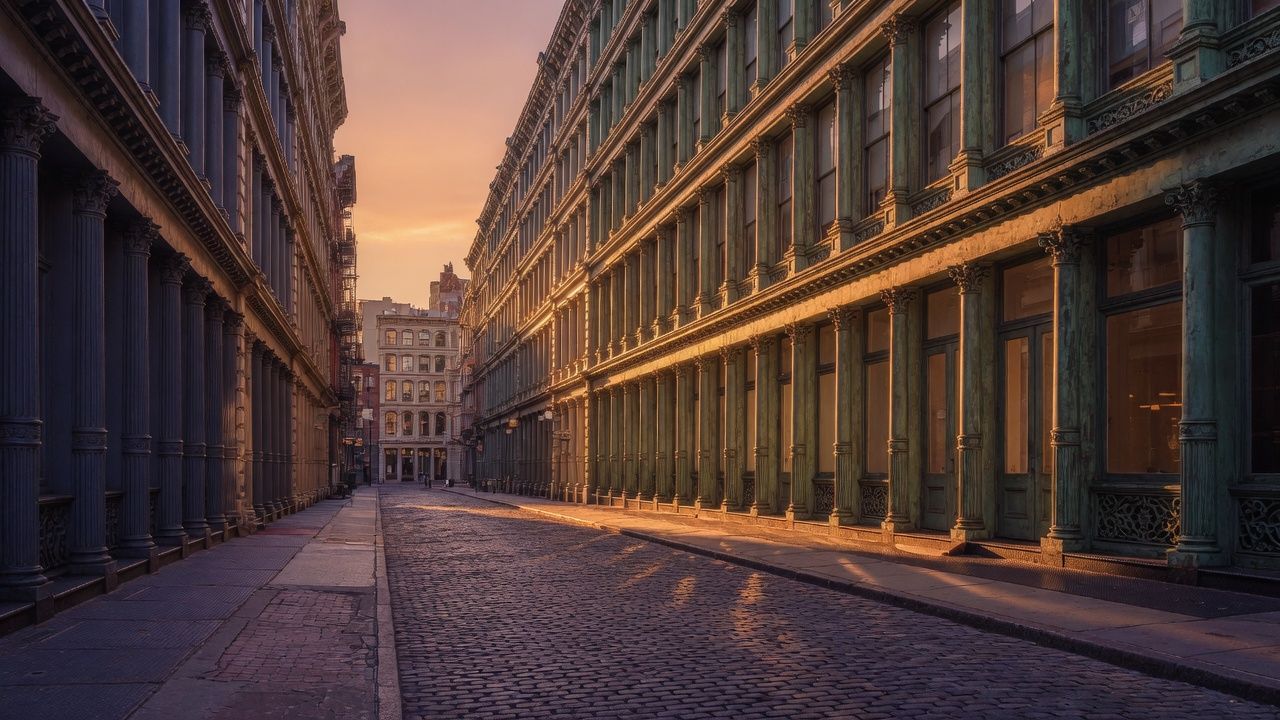
A canyon of iron in perfect light.
Every column a vertical antenna aligned with the Earth. Every facade a resonator.
The Concentration
The densest concentration of ferromagnetic architecture on Earth.
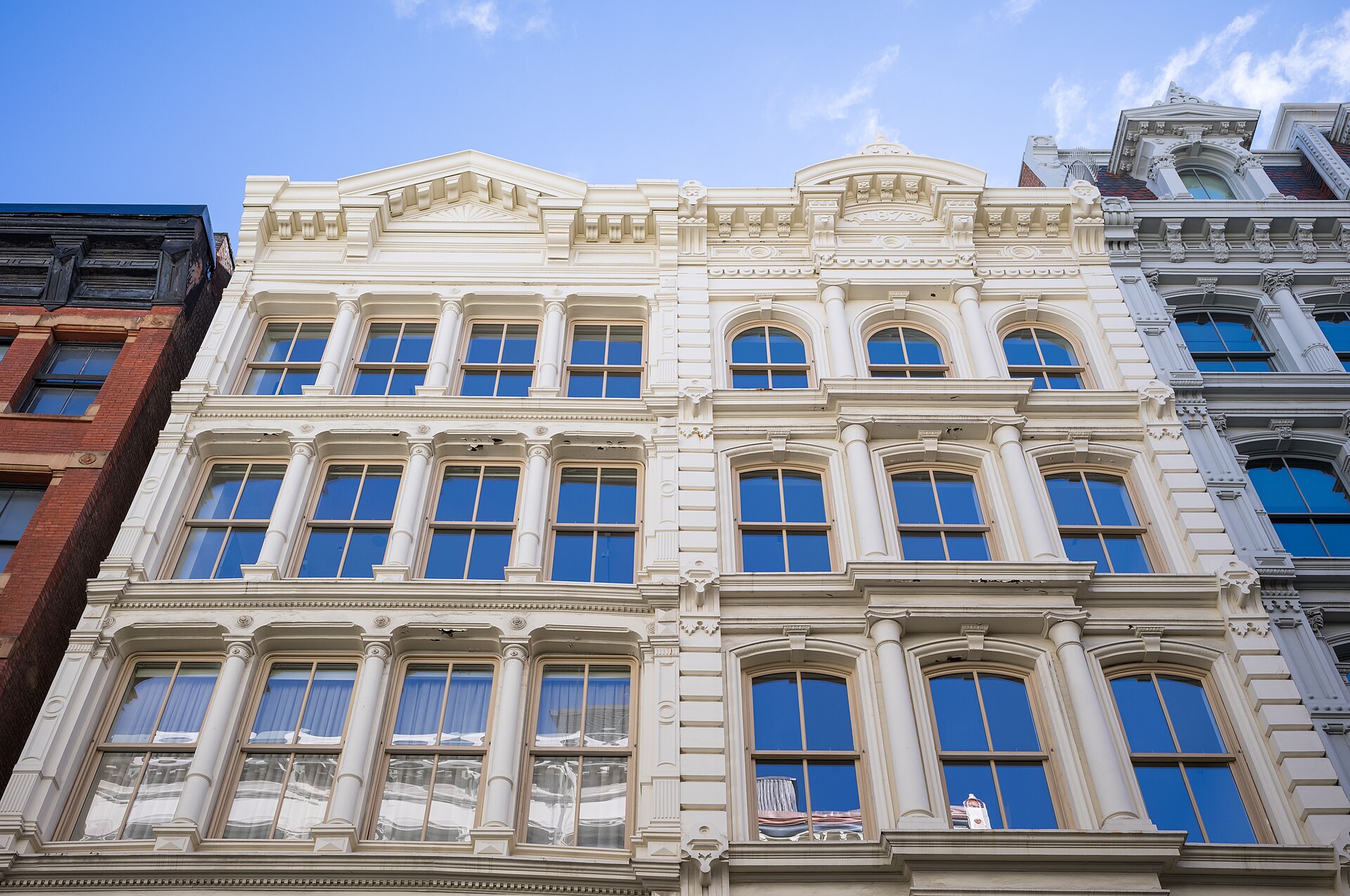
94% iron by weight.
Ferromagnetic. Every column, every facade, every floor.
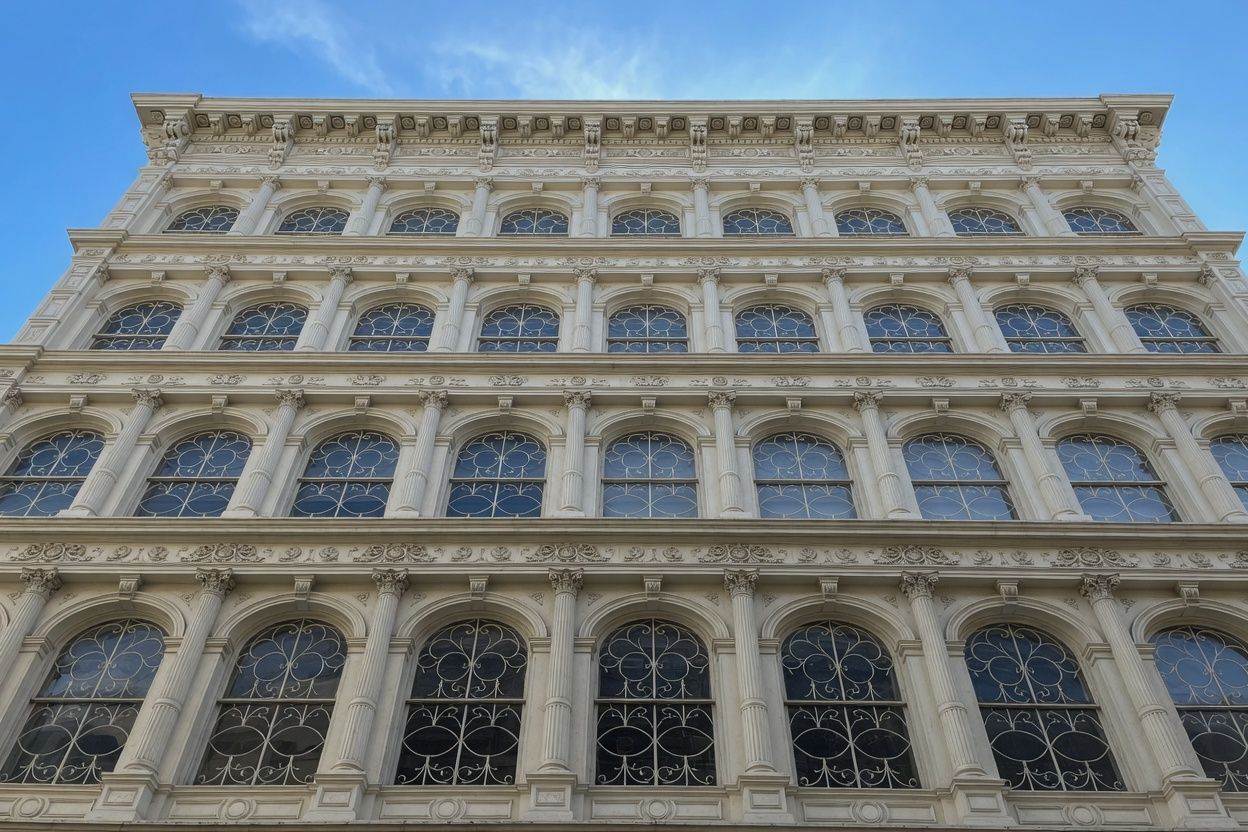
Five stories. Forty columns. One language.
Vitruvius, cast in a foundry and bolted together on Broadway.
The Man
Daniel D. Badger.
Born 1806 on a shipbuilder's island.
Raised among the geometry of warship hulls.
Trained in the mechanic arts under the institutional umbrella
of Paul Revere's association.
PLATE I — FRONTISPIECE
Architectural Iron Works. D.D. Badger & Others, Proprietors.
Office, 42 Duane St. Works, 13th & 14th Sts., betw. Avs. B & C, New York.
The Catalog
In 1865, Badger published a menu.
102 plates. 250 pages.
Every element a Greek temple might require —
available for purchase, cast in molds,
shipped by rail, bolted together on site.
PLATE XXI — DESIGN FOR STORE FRONT
Five stories of iron, drawn to be ordered by the piece.
Pick a facade from the book; it ships by rail and bolts together on Broadway.
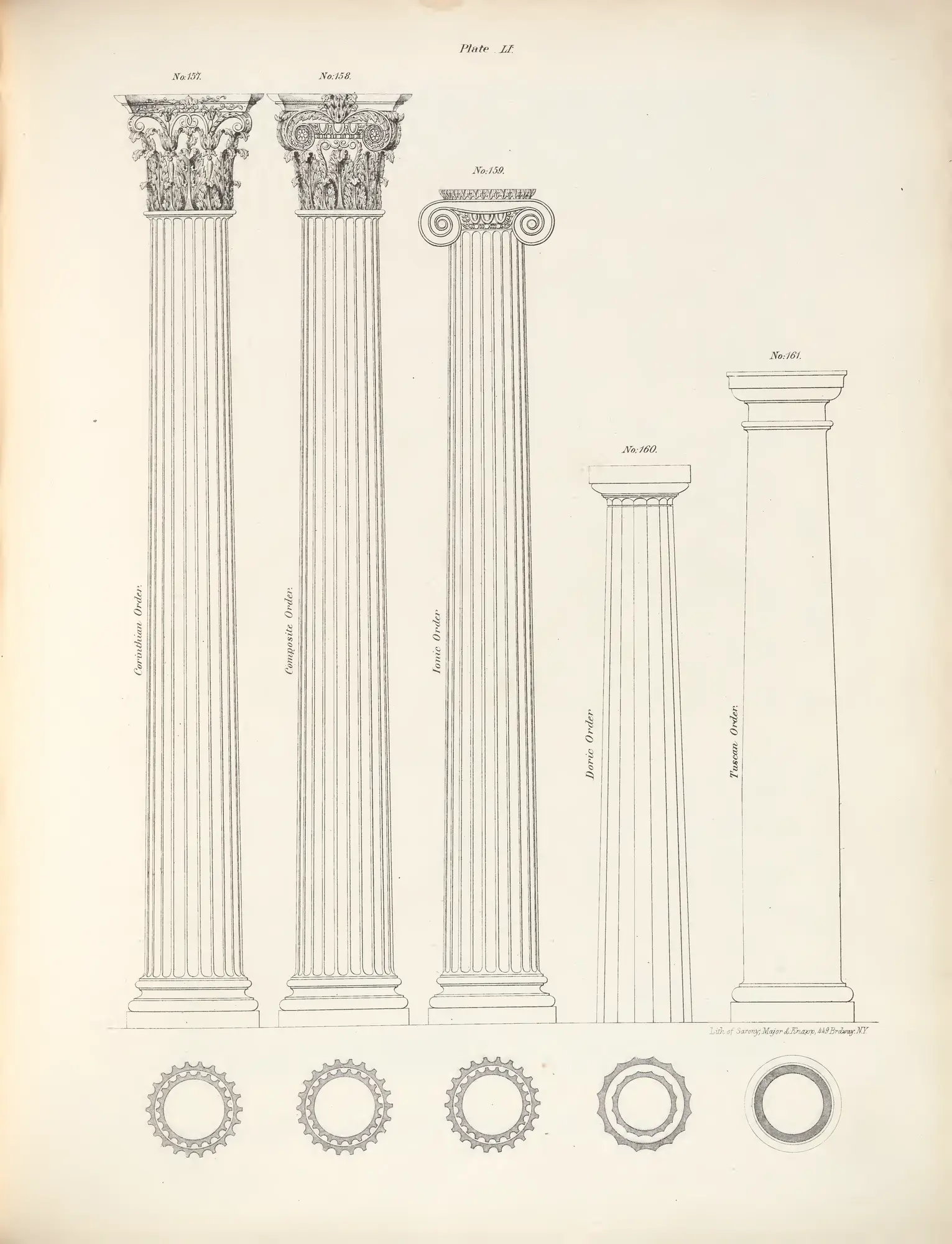
PLATE LI — THE FIVE CLASSICAL ORDERS
Corinthian. Composite. Ionic. Doric. Tuscan.
Two millennia of sacred geometry reduced to catalog numbers.
For two thousand years, producing these forms
required master stone carvers working by hand,
for months, at extraordinary expense.
Badger reduced them to mold numbers.
PLATE III — THE HAUGHWOUT BUILDING
Broadway and Broome Street. The finest surviving cast iron building in the world.
Also the first building in New York equipped with a passenger elevator (Elisha Otis, 1857).
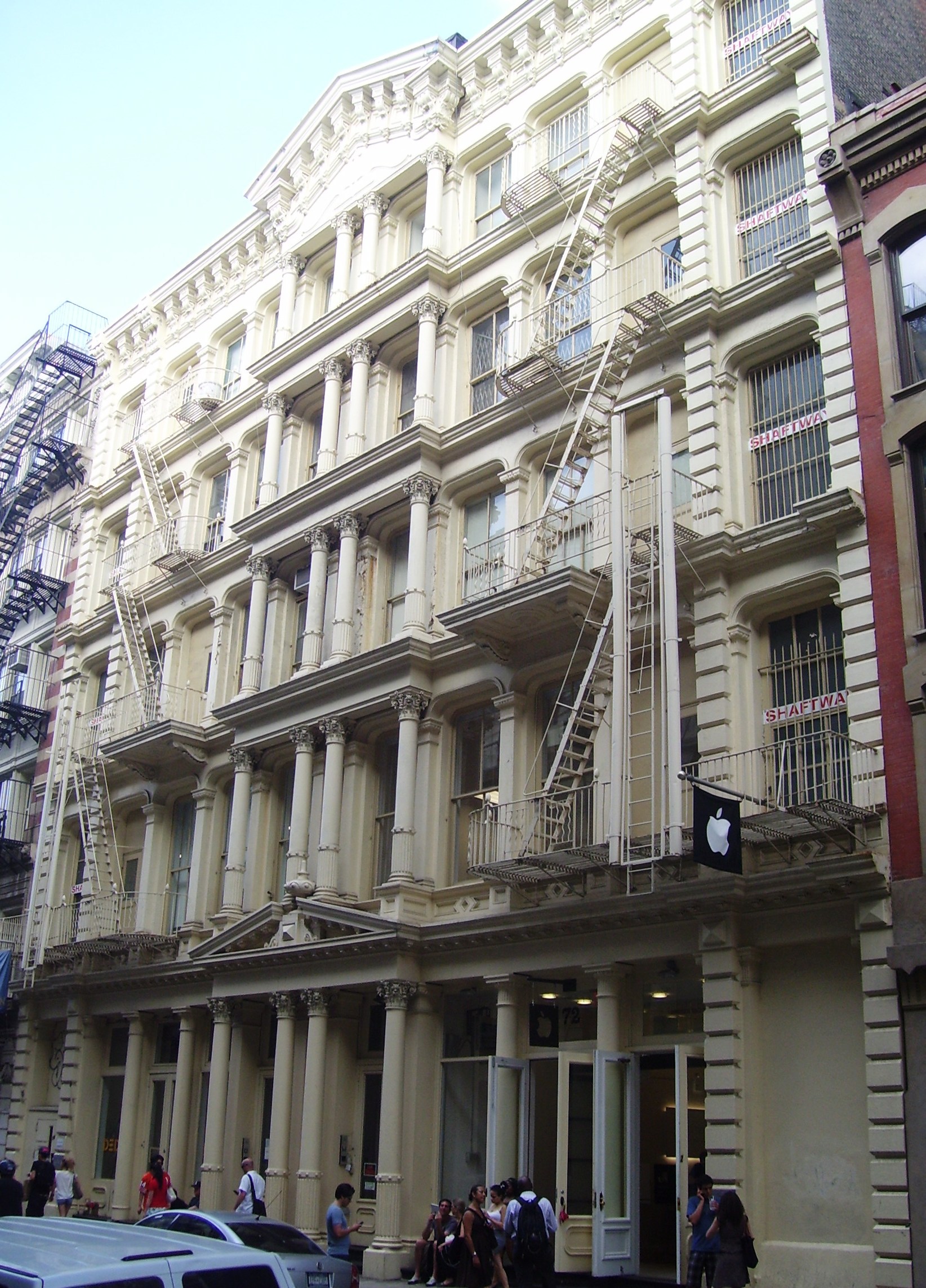
PLATE XX — SOHO LOFT FACADE
Ground-floor grandeur. Upper floors in repeating classical rhythm.
Fire escapes as ornament. All cast from the same molds.
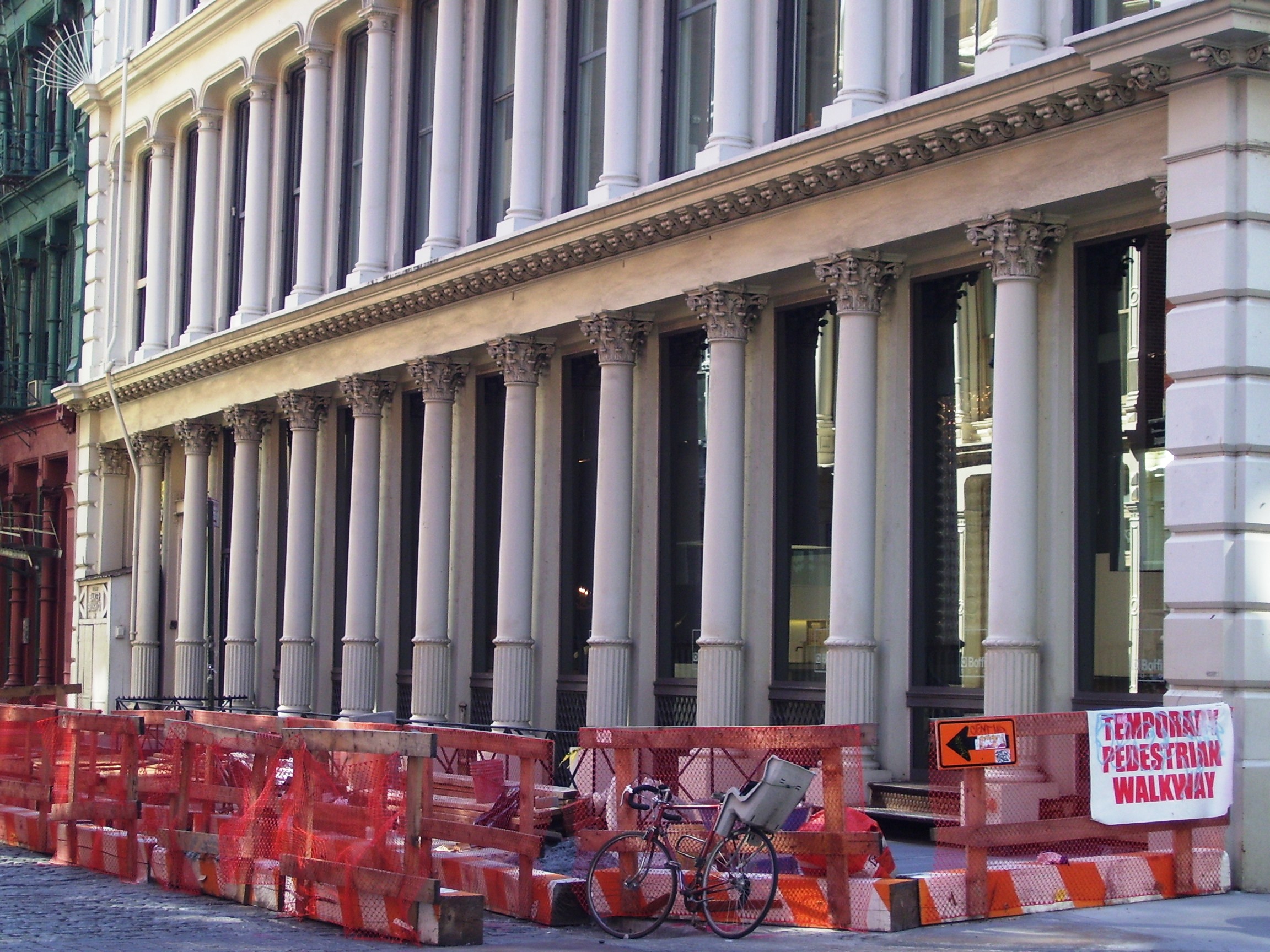
Each column: 10 inches diameter. 953 lbs per floor.
8 columns per floor. 5 floors. 40 columns per building.
19 tons of iron per building.
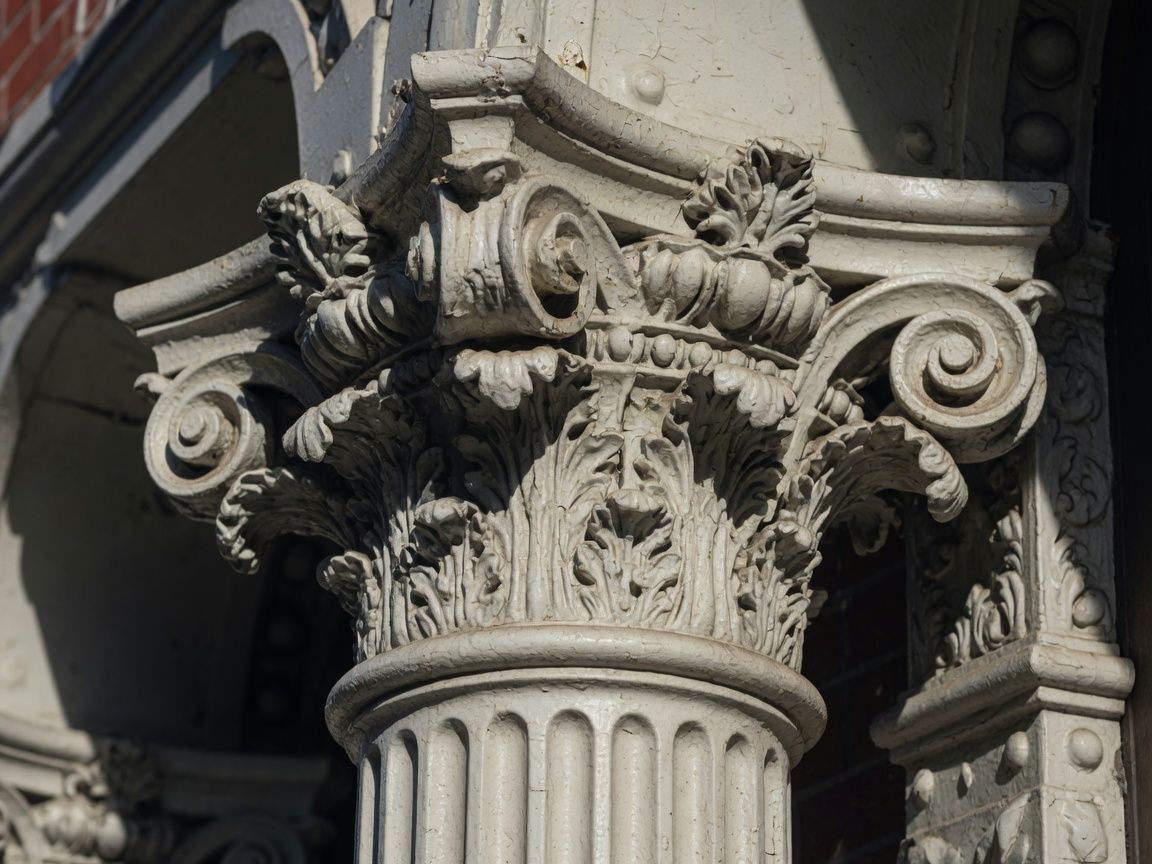
Classical orders, cast in iron.
Acanthus, volutes, and the fingerprints of the mold makers.
What happens when you live inside it?
The Invisible Architecture
Earth's magnetic field at NYC: 52.0 μT
Inclination: 67° from horizontal.
The field is predominantly vertical.
Cast iron columns are vertical.
The columns are aligned with the dominant component of Earth's field —
maximizing electromagnetic coupling like an antenna aligned with its signal.
Field Perturbation from a Single Column
At sleeping distance from a cast iron column,
the field perturbation is 3.65 times the entire ambient Earth field.
The Five-Layer Stack
SoHo is not a simple iron-in-building situation. It is a layered system.
Layer 3: The Subway
The subway DC field at the surface is 26.7 μT.
That is 51% of Earth's entire field at NYC.
Trains pass every 1–2 minutes.
The field oscillates at 0.1–2 Hz.
Delta brainwave range. Deep sleep. Healing.
Unconscious creative processing. Meditative states.
The subway turns the cast iron columns into
pulsing electromagnetic beacons.
The Proof of Principle
Sedona, Arizona.
300-million-year-old iron oxide formations.
Field perturbation: ~0.1 μT.
Four million visitors a year.
Across decades, across belief systems, across levels of skepticism —
consistent subjective effects. Tingling. Warmth. Emotional opening.
Sedona's natural field: 0.1 μT
SoHo loft center: 9.15 μT
90× stronger
SoHo near a column: 190 μT
1,900× stronger
If the earth's natural geology affects human consciousness at 0.1 μT,
what happens inside a building where the field is 1,900 times stronger?
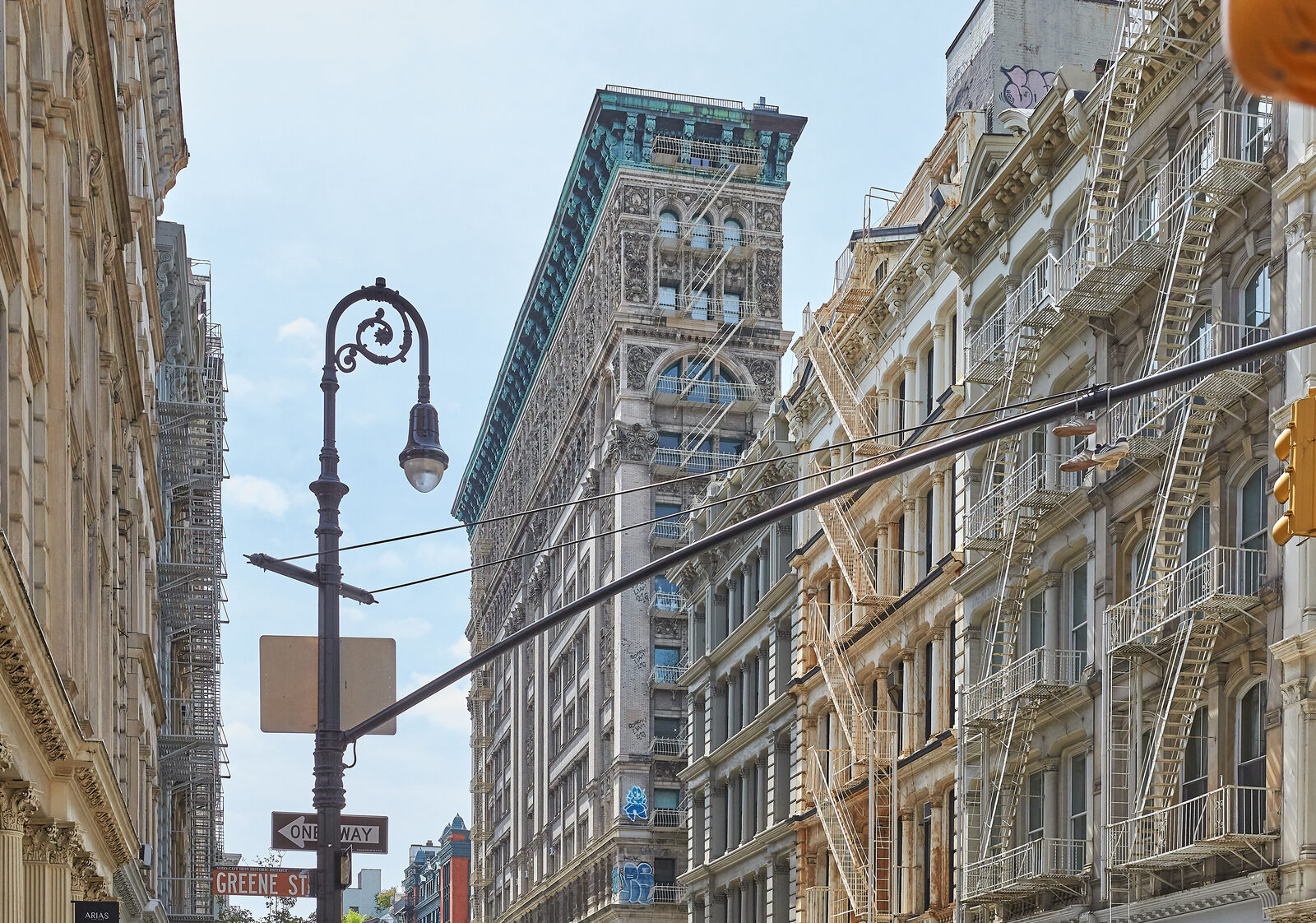
A canyon of iron and glass.
Each facade: ~148 tons of ferromagnetic material.
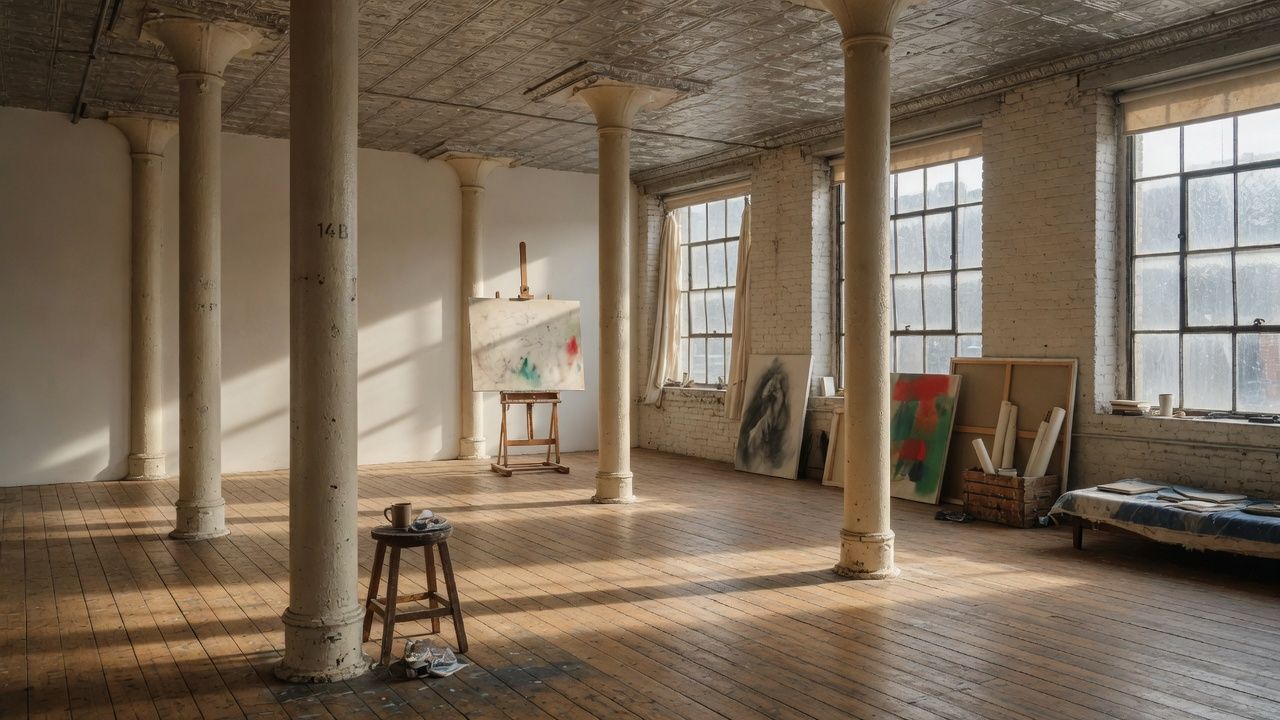
Inside the iron. 24 hours a day. For years.
The columns never left. The field never left.
What Happened Inside
In the 1960s, artists moved into these buildings.
They weren't supposed to live there.
The lofts were commercial. Illegal to inhabit.
They lived there anyway.
Inside the iron. 24 hours a day. For years.
What followed was the most explosive concentration
of creative output in American history.
Abstract Expressionism. Minimalism. Pop Art.
Fluxus. Conceptual Art. No Wave. Punk.
Hip-hop. Graffiti. Performance Art.
The downtown film scene. The gallery system.
All within these twenty-six blocks.
All during the narrow window when artists
were living inside the iron.
The loft era is over. The artists are gone.
The buildings remain. The iron remains. The field remains.
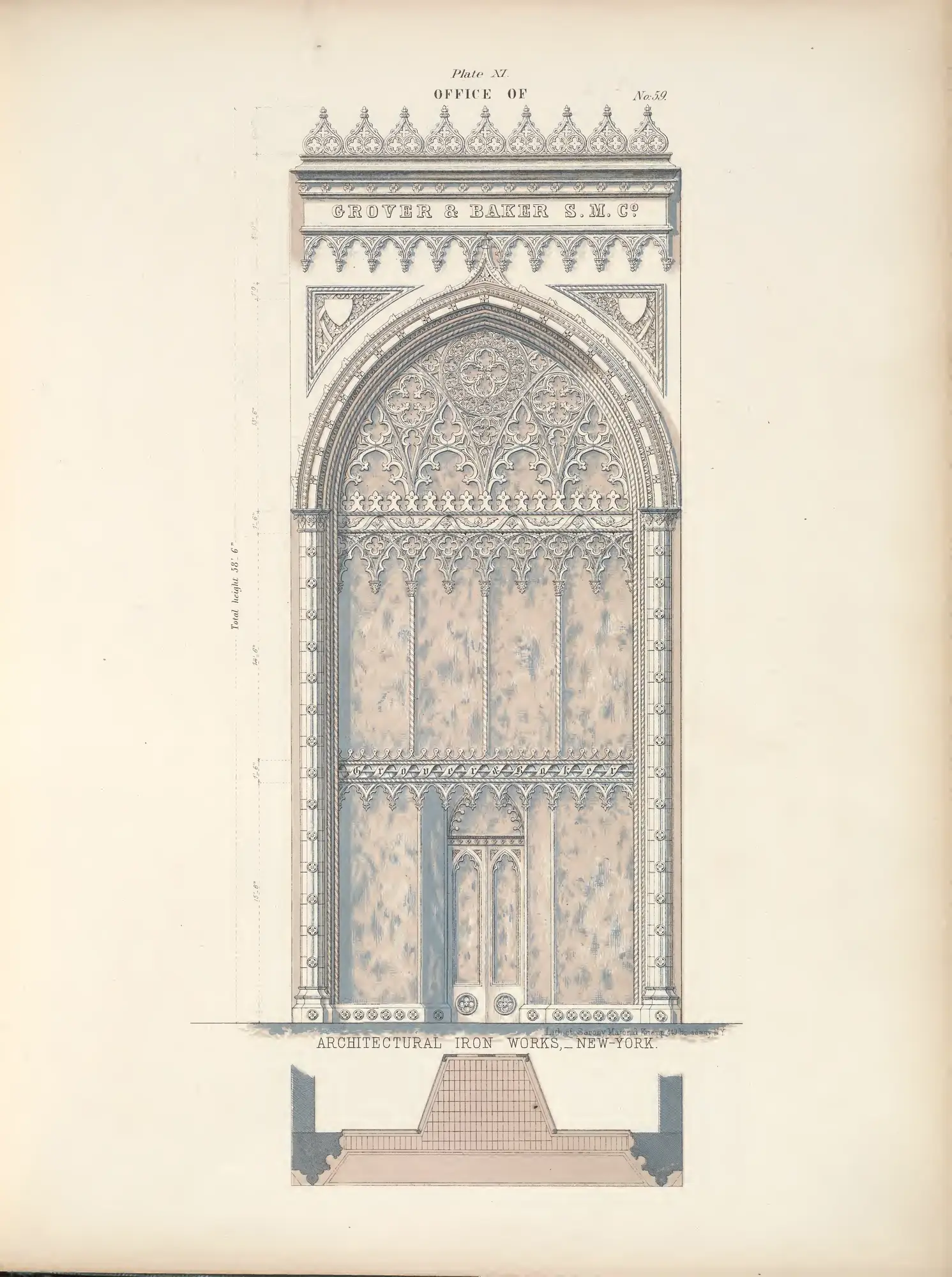
PLATE XI — THE GOTHIC ANOMALY
A Gothic cathedral window — complete with pointed arch, tracery, and trefoils —
rendered in cast iron for the storefront of a sewing machine manufacturer.
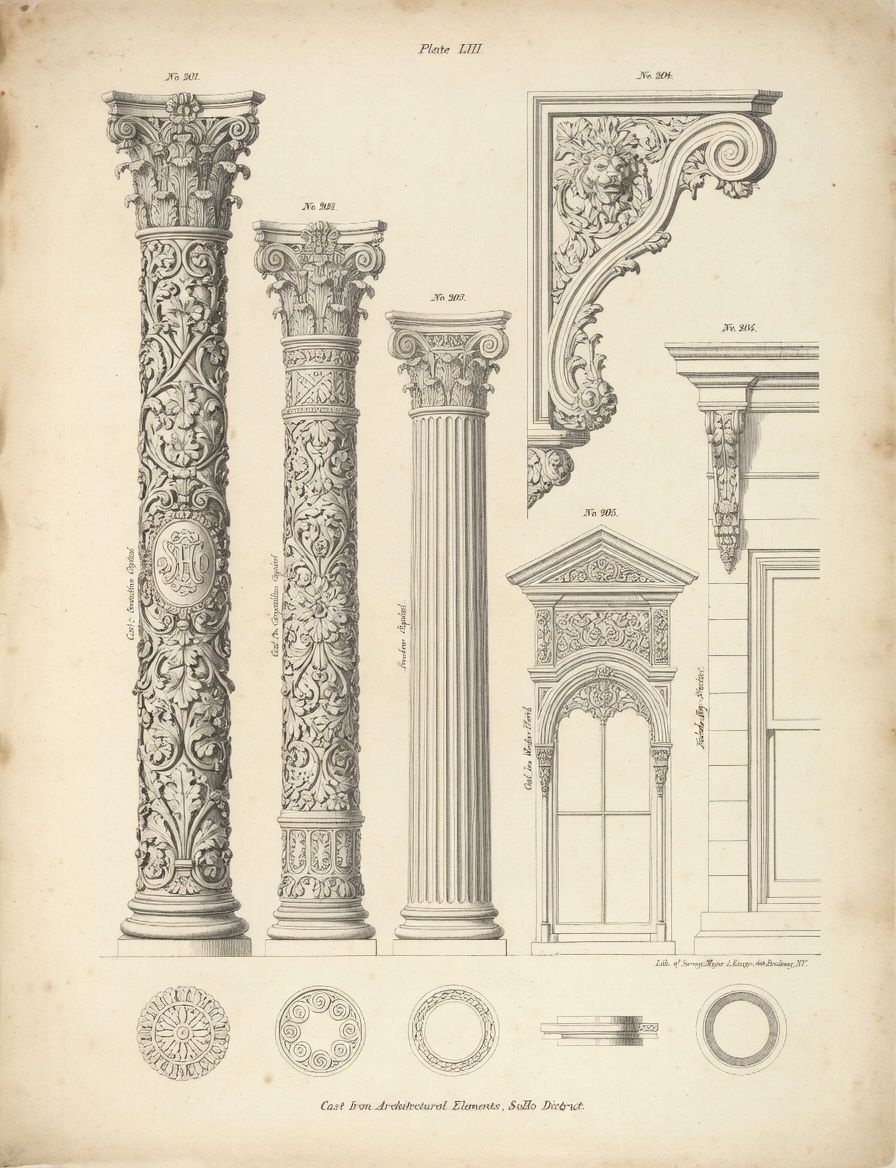
PLATE LII — IRON ELEMENTS
Capitals. Brackets. Window hoods.
The entire classical vocabulary, cast once and repeated across twenty-six blocks.
Badger did not know what he built.
He thought he was manufacturing facades.
He built an electromagnetic environment
that has no equivalent anywhere on Earth.
Ferromagnetic columns in Vitruvian proportions.
Aligned with Earth's field.
Energized by a subway system that didn't exist yet.
Sat on bedrock that had been accumulating magnetite
for 450 million years.
The buildings did not create the art.
The buildings created the conditions.
The buildings did not create the art.
The buildings created the conditions.
This is not a proven thesis.
It is a calculated, falsifiable hypothesis
supported by established physics, peer-reviewed neuroscience,
verifiable geological data, and a geographic correlation
that no conventional explanation adequately accounts for.
Every calculation is reproducible.
The reader is invited to verify the numbers.