The Buried Line
NYC's First Subway and the History That Disappeared
400,000
Riders in Year One
58
Days to Build
42
Years Forgotten
0
Memorials Today
"A tube, a car, a revolving fan. Little more is required."
Alfred Ely Beach, Scientific American, 1870
01 — The Builder
Alfred Ely Beach Built What New York Refused to Allow
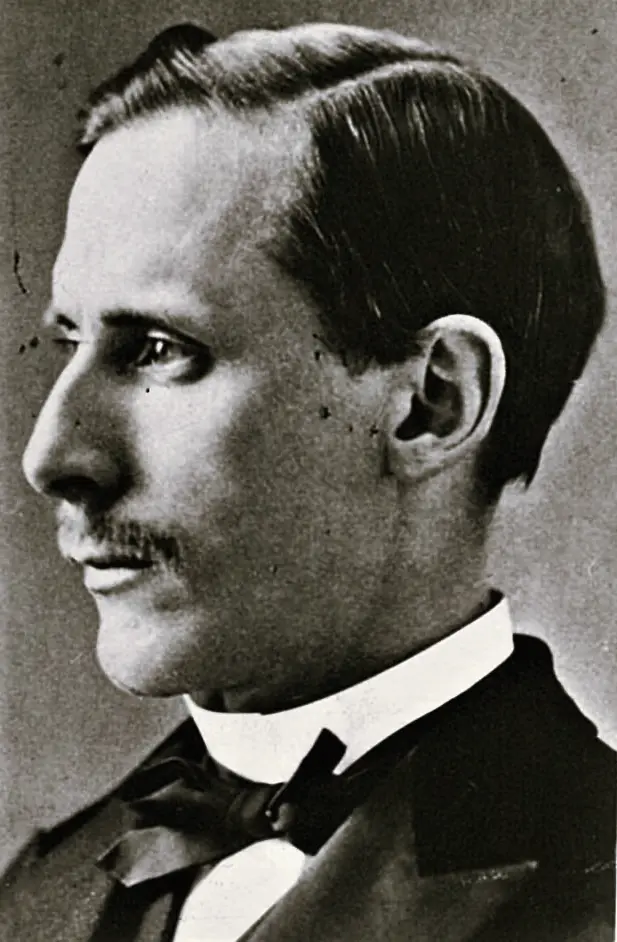
Alfred Ely Beach (1826–1896)Owner-editor, Scientific American • Public domain
Beach was not some eccentric tinkerer. He was the owner and editor of Scientific American,
one of the most respected publications in the country. A patent lawyer who processed thousands of inventions.
Holder of a gold medal from the 1853 Crystal Palace Exposition for a
typewriter for the blind.
By the late 1860s, 700,000 people were crammed into lower Manhattan. Horse-drawn omnibuses
moved at walking pace through traffic so dense it could take 30 minutes to cross Broadway. Horses collapsed
from exhaustion and were left in the streets. The air was thick with manure and dust.
Beach had been proposing underground transit since 1849. In 1867, he built
a working prototype at the American Institute Fair — a 100-foot wooden tube, 6 feet in diameter, carrying
10 passengers by air pressure. The public loved it.
But the people who controlled New York's transportation had no interest in a better system. They had interest in
profit from the existing one.
02 — The Secret Dig
58 Nights Under Broadway
New York in 1868 was controlled by William "Boss" Tweed and the Tammany Hall political machine.
Tweed's ring was siphoning between $40 million and $200 million from city
contracts. He had financial stakes in elevated railways and horse car lines. An underground subway threatened
every revenue stream he controlled.
So Beach did something remarkable. He lied. He applied for a permit to build pneumatic mail tubes
under Broadway — small tubes for letters and packages. The city approved it. Then he built something else entirely.
He rented the basement of Devlin's Clothing Store at 260 Broadway, directly across
from City Hall. For 58 nights, his workers dug by lantern light, carting dirt out under cover of darkness, building
a tunnel right beneath the feet of the politicians who would have stopped them.
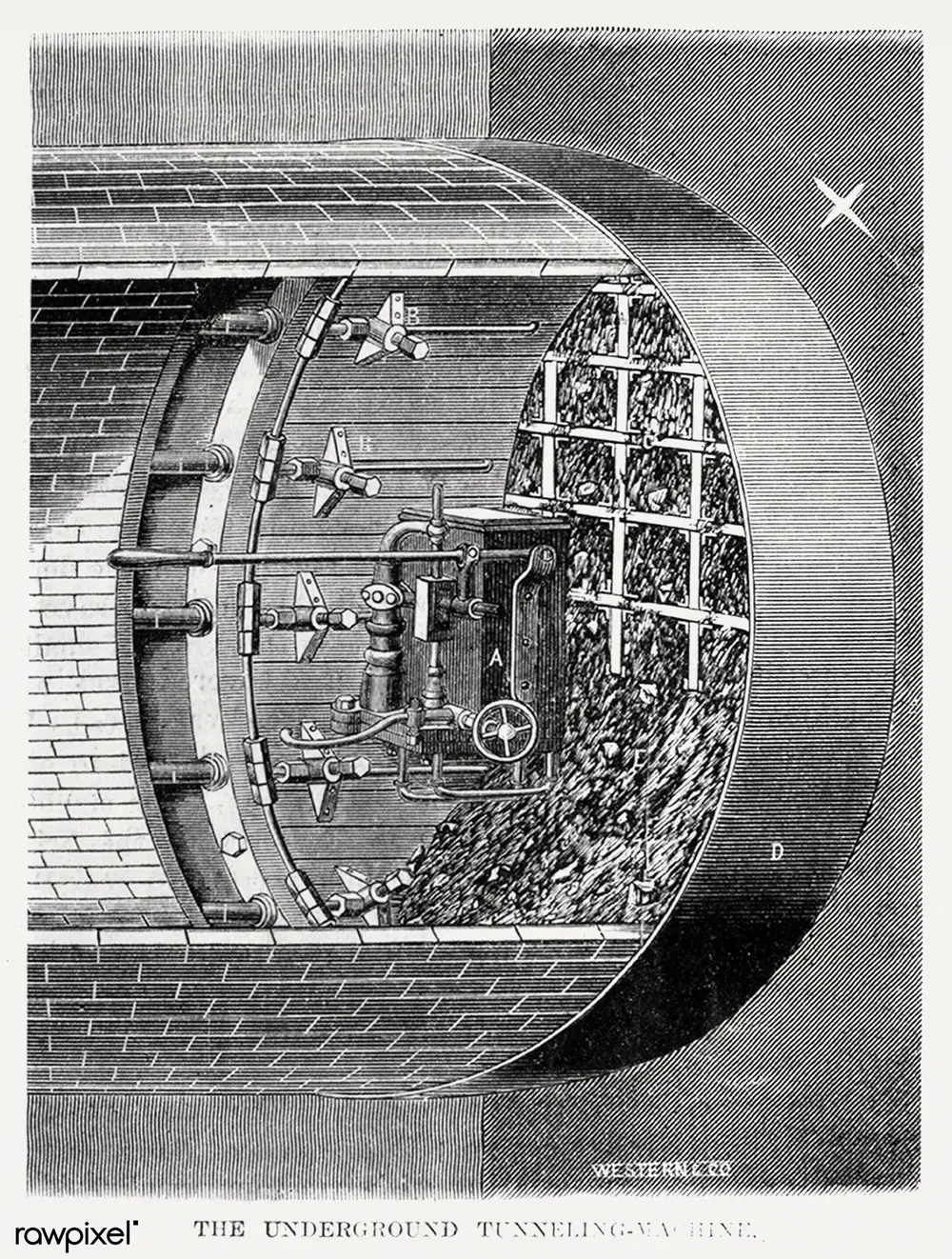
Beach invented a hydraulic tunneling shield for the project — the first circular tunnel design
ever used in America. 312 feet of tunnel, 8 feet in diameter, lined with brick.
He spent $350,000 of his own money — $8.47 million today.
The hydraulic tunneling shield — first circular tunnel design in AmericaIllustrated Description of the Broadway Underground Railway, 1872 • NYPL
03 — The Station
A Palace Beneath the Streets
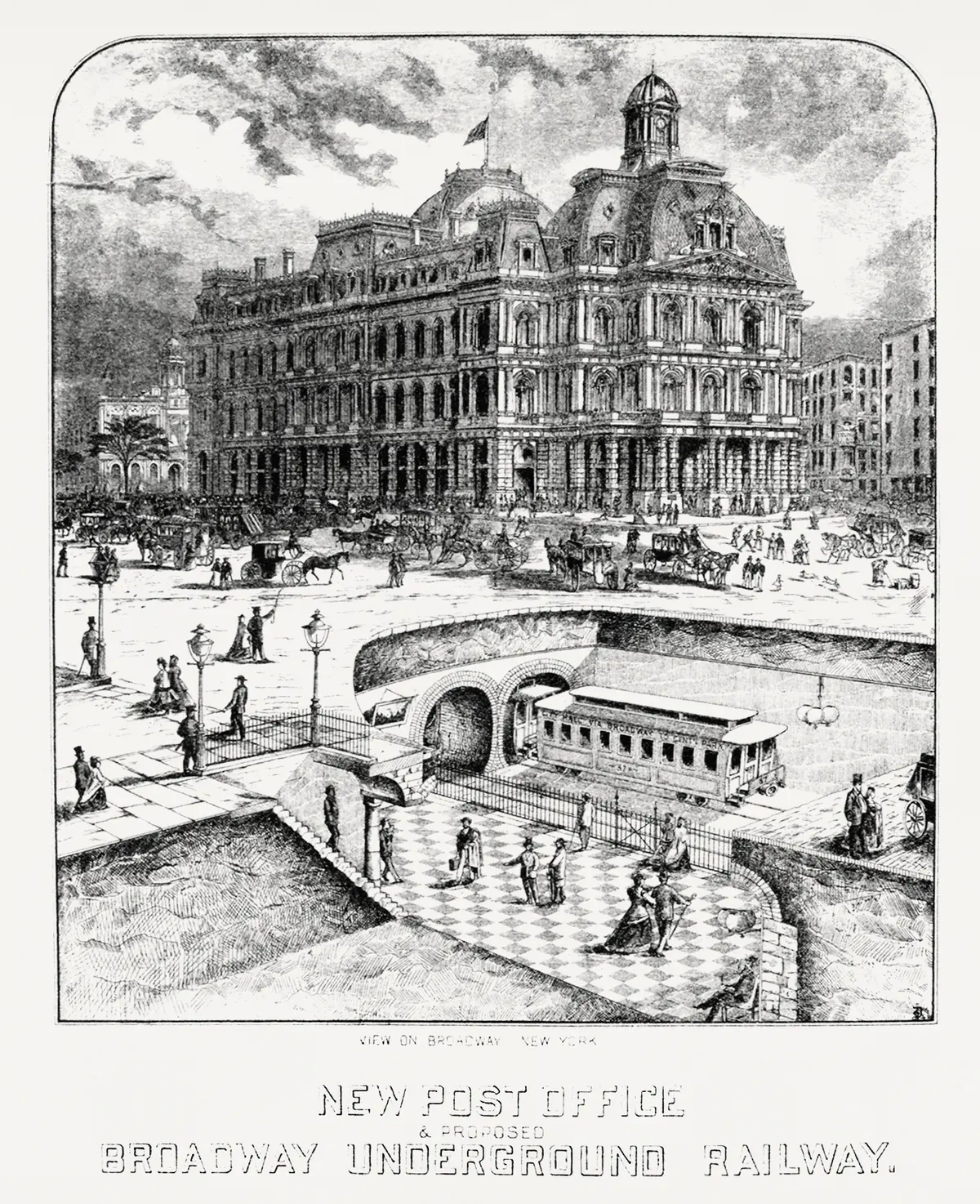
On February 26, 1870, Beach threw open the doors without warning. What he revealed
beneath Broadway astonished everyone who entered.
The waiting room had frescoed walls and elegant paintings. A grand piano stood in the corner.
A bubbling fountain with goldfish swimming in it. Plush seating for passengers. Gas lamps and special
zirconia lights illuminated everything in soft white glow.
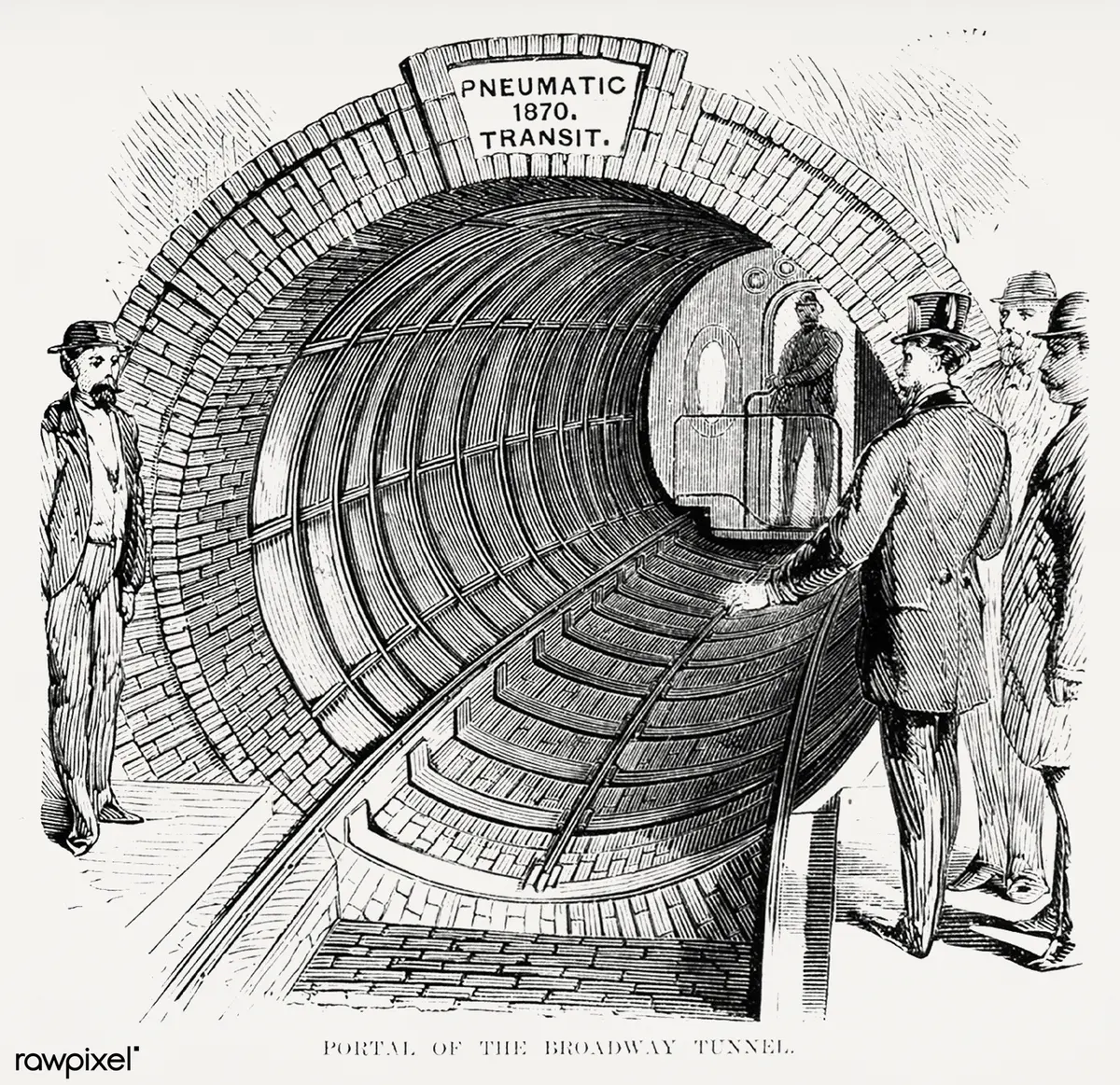
The car itself was cylindrical, with upholstered seats for 22 passengers. Power came from the
"Western Tornado" — a 48-ton blower built by the Roots Patent Force Blast Company,
fed by a 100-horsepower steam engine delivering 100,000 cubic feet of air per minute.
Passengers described the ride as gliding. No jerking, no smoke, no noise
except the soft rush of air. 11,000 rides in the first two weeks. 400,000 in the first year.
Proceeds went to an orphanage for children of soldiers and sailors.
“New York City — Broadway Underground Railway” — the station beneath the streetIllustrated Description of the Broadway Underground Railway, 1872 • NYPL, digitally enhanced
The portal of the Broadway tunnel — the pneumatic car at rest1872 • The New York Public Library
04 — The Location
Beneath Your Feet: The Tunnel Today
The tunnel ran one block under Broadway, from Warren Street to a dead-end at
Murray Street. Today, the N, R, and W trains run through this exact space.
Beach's original brickwork was incorporated into the BMT tunnel walls — it's still there, indistinguishable
from the 1912 construction that absorbed it.
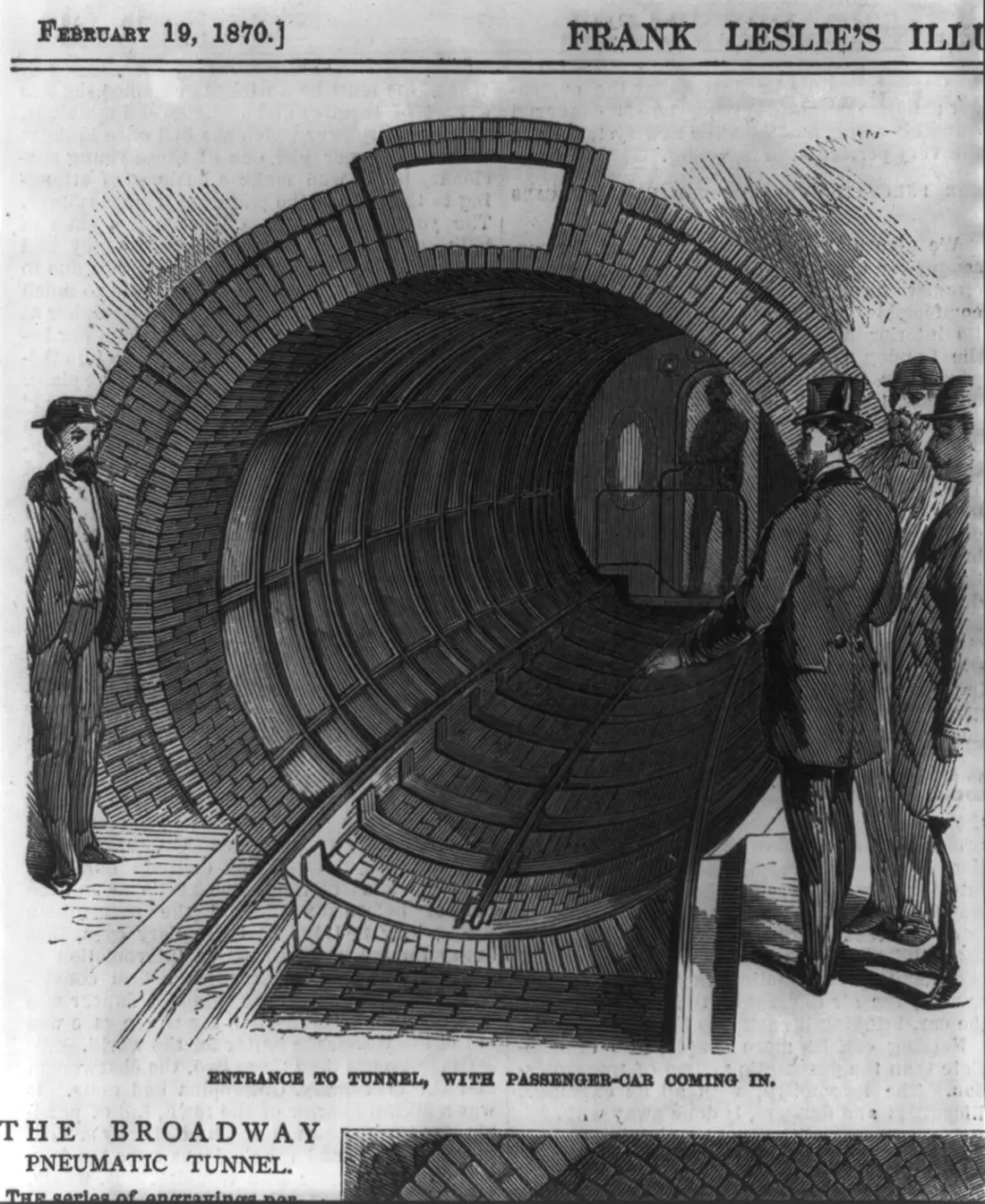
“The Broadway Pneumatic Tunnel” — the car gliding in on a cushion of airFrank Leslie’s Illustrated Newspaper, February 26, 1870 • Library of Congress
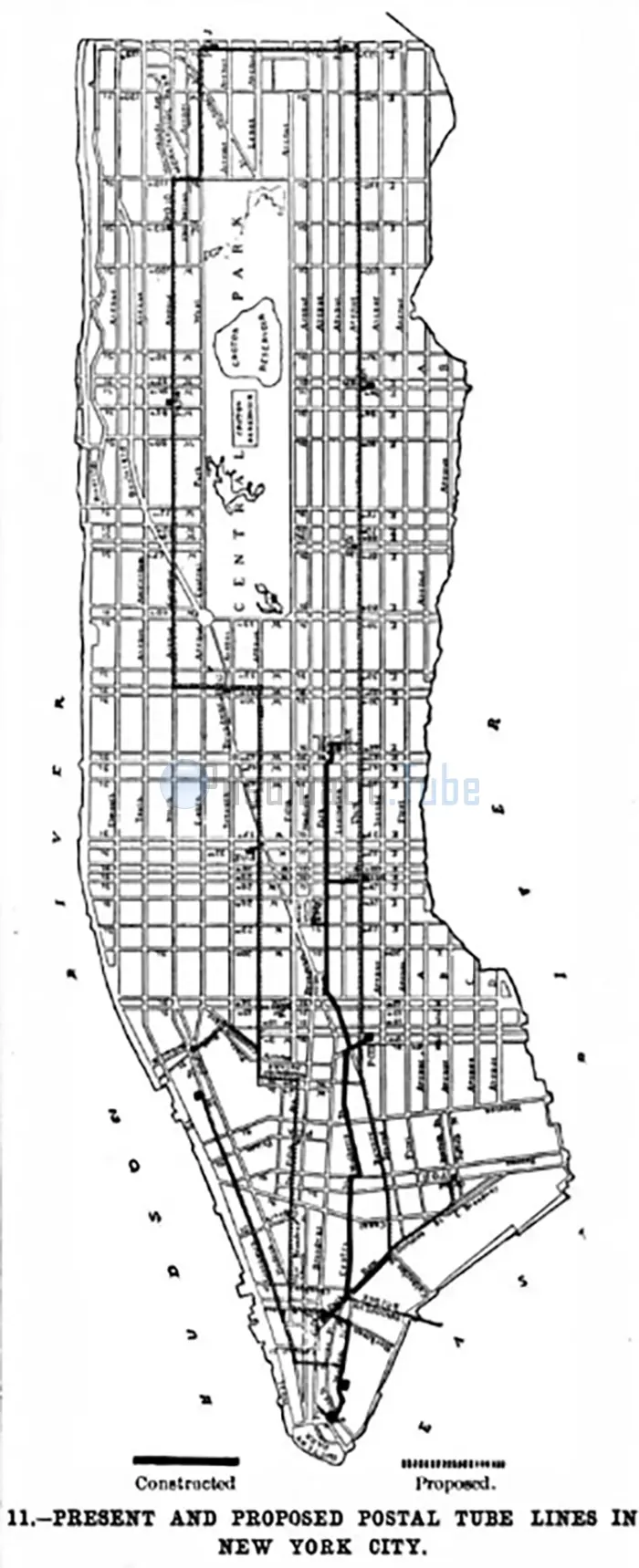
Beach’s proposed pneumatic tube network for Manhattan, 1868Alfred Ely Beach • Public domain
Legend
Beach Tunnel (1870)
Modern N/R/W Line
Key Location
Destroyed / Lost
Nearby Underground
Cross-Section: What Lies Beneath Broadway at Warren Street
0 ft
Broadway — Street Level
6 lanes, pedestrians, vehicles
5-10 ft
Utility Network
Con Edison steam pipes, electric, telecom, water, sewer
~15 ft
Beach Pneumatic Tunnel (1870)
8 ft diameter • Remnants absorbed into BMT walls
~25 ft
BMT Broadway Line (1918) — N/R/W
Active service • City Hall station
~60 ft
Manhattan Schist Bedrock
Water Tunnel No. 3 far below
05 — The Pattern
A Technology That Worked. A System That Killed It.
The sequence of events follows a pattern so precise it demands attention. A working technology. A public that
wants it. An establishment that blocks it at every turn. And when all else fails, the financial system itself
collapses at the exact moment of victory.
1849
Beach Proposes Underground Transit
First subway proposal published in Scientific American. Decades ahead of his time.
1867
Working Prototype Demonstrated
American Institute Fair. 100-foot tube, 10 passengers. Public enthusiasm is immediate.
1868
Tweed Controls NYC
Boss Tweed's machine siphons $40-200M from city contracts. Stakes in elevated railways and horse cars. Beach's subway is a direct threat.
1869
Secret Construction Begins
Beach applies for pneumatic mail tube permits. Builds a subway instead. 58 nights of covert digging from Devlin's Clothing Store basement.
FEB 26, 1870
The Grand Opening
Beach reveals the subway to stunned politicians and press. Chandeliers, frescoes, goldfish fountain, grand piano. 400,000 riders in year one.
1871-1872
Governor Vetoes Expansion — Twice
Bills pass both houses of the legislature. Governor Hoffman — Tweed's protege — vetoes them both. Property owners file lawsuits.
1873
Tweed Falls, Expansion Approved
New governor John Dix signs Beach's expansion bill. Full authorization: 5 miles from Battery Park to Central Park. Victory after 4 years of fighting.
3 WEEKS LATER
The Panic of 1873
Jay Cooke & Co. collapses. Railroad speculation triggers the worst financial crisis in US history. 89 railroads bankrupt. 18,000 businesses fail. Beach's investors vanish overnight.
APRIL 1873
The Subway Closes
Beach has 6 months to secure funding during the worst depression in American history. Impossible. The tunnel is bricked up. The entrance is sealed.
1896
Beach Dies in Obscurity
His obituary in the New York Times runs only a few inches. The man who built America's first subway fades from public memory.
1898
The Station Burns
Rogers Peet Building destroyed by fire. The waiting room, the fountain, the piano — presumably destroyed. No marker, no memorial.
1904
NYC "Invents" the Subway
The IRT opens. New York acts like underground transit was just invented. 34 years after Beach proved it worked.
FEB 1912
The Tunnel Is Found — Then Destroyed
BMT workers break through a wall. Find the car on its tracks, the tunneling shield, the piano. 42 years perfectly preserved. They photograph it, then destroy everything for the new subway line.
1912+
The Evidence Disappears
Tunneling shield donated to Cornell University. Cornell has since lost it. The successor company sues NYC — outcome unrecorded. A plaque was commissioned — no one can find it.
1953
NYC Pneumatic Mail System Ends
The pneumatic tube mail system — descended from Beach's original permit — operated 27 miles between 22 post offices. It ran for 56 years. The subway it came from lasted 3.
2013
Musk Announces "Hyperloop"
Pods traveling through low-pressure tubes propelled by air. The media calls it revolutionary, futuristic, "a fifth mode of transportation never before imagined." Beach described the same technology in 1870.
06 — The Parallel
1870 vs. 2013: Same Technology, Different Branding
Beach — 1870
Method
Compressed air pushes cylindrical car through sealed tube
Feasibility studies. No operational system. 0 riders.
Cost
$6-7 billion estimated for LA-SF — never funded
Outcome
Endless studies, prototypes, nothing operational after 12+ years
07 — The Search
What Remains: An Audit of the Evidence
Every piece of physical evidence from Beach's subway has been destroyed, lost, or absorbed into structures
controlled by entities with no interest in acknowledging it. Here is the status of each.
Confirmed — Private Access
Plaque at 258 Broadway
A brass plaque exists in the lobby of 258 Broadway (City Hall Tower), the co-op building that replaced the burned Rogers Peet Building. It reads: "The first underground subway in New York City was secretly dug on this site in 1869." Accessible only if a resident lets you in. Units sell for ~$1.5M.
258 Broadway • 40.7134, -74.0072
Unverified — High Interest
258 Broadway Sub-Basement
In 2024, curved white brickwork was found in the sub-basement of 258 Broadway consistent with Beach's tunnel construction. This would be the former station/waiting room area. No archaeological survey has been conducted. This is potentially the only surviving structural remnant.
258 Broadway sub-basement • 40.7134, -74.0072
Confirmed — Inaccessible
Beach Brickwork in BMT Tunnel Walls
Remnants of the original tunnel were incorporated into the BMT Broadway Line construction in 1912. The brickwork is embedded in the active N/R/W subway infrastructure. Matthew Algeo (2025): "I could find no physical remnant of the Beach Pneumatic Railway." No archaeological survey has been attempted.
BMT City Hall Station • 40.7133, -74.0070
Debunked
Reade Street Manhole Access
An MTA source told Untapped Cities: "The story on being able to enter into an old section of the Beach Pneumatic Tubes by way of a subway grating on Reade Street is lore and is simply not true." Geographic problem: Reade Street is two full blocks south of the tunnel terminus. A 1978 photo claiming to show Beach tunnel at Duane/Reade was assessed by the Museum of the City of New York as NOT Beach brickwork.
Broadway & Reade St • 40.7141, -74.0064
Not "Forgotten" — Ignored
The 1899 Photograph
The NY Historical Society holds a photograph from 1899 showing men inside the tunnel — 13 years before the "1912 rediscovery." After the 1898 fire, cleanup workers found the tunnel intact. Beach's grandson Stanley Yale Beach was photographed inside. The ventilation shaft in City Hall Park was apparently accessible. The tunnel wasn't forgotten — it was ignored.
NY Historical Society • PR 20, Box 90, Folder 3
Lost
Cornell Tunneling Shield
Beach's hydraulic tunneling shield — the first circular tunnel design in America, forerunner of modern TBMs — was donated to Cornell University in 1912. Cornell has since "lost track of its whereabouts." One of the most significant engineering artifacts in American transit history, simply misplaced.
Cornell University, Ithaca, NY
Likely Never Installed
The Beach Plaque at City Hall Station
The New-York Historical Society commissioned a plaque honoring Alfred Beach for the BMT City Hall station (newspaper reports, 1932). Atlas Obscura: "there is no evidence that a plaque was actually made nor installed in the station." No visitor or transit worker has confirmed seeing it.
City Hall N/R/W Station
Destroyed — 1912
The Pneumatic Car
First found in 1899 (not 1912 as commonly claimed) when fire cleanup workers broke through. By 1912, the wooden car had "almost completely disintegrated." Remains reportedly went to the Public Service Commission. The grand piano was also found. Everything destroyed for BMT construction.
Under Broadway between Warren & Murray
Outcome Unknown
The Successor Lawsuit
The Beach Pneumatic Transit Company's successor sued NYC for destroying their property during 1912 BMT construction. The outcome is unrecorded. Blank stock certificates survive (Museum of the City of New York, item 42.314.114). The company was never formally dissolved.
NYC Municipal Archives • Unfiled
Accessible — Tours
Old IRT City Hall Station
The famous abandoned 1904 IRT station with Guastavino tiles sits just north of the Beach tunnel location. Accessible via NY Transit Museum tours (members only) or by staying on the 6 train past Brooklyn Bridge. Different system but geographically adjacent.
City Hall Park • 40.7131, -74.0044
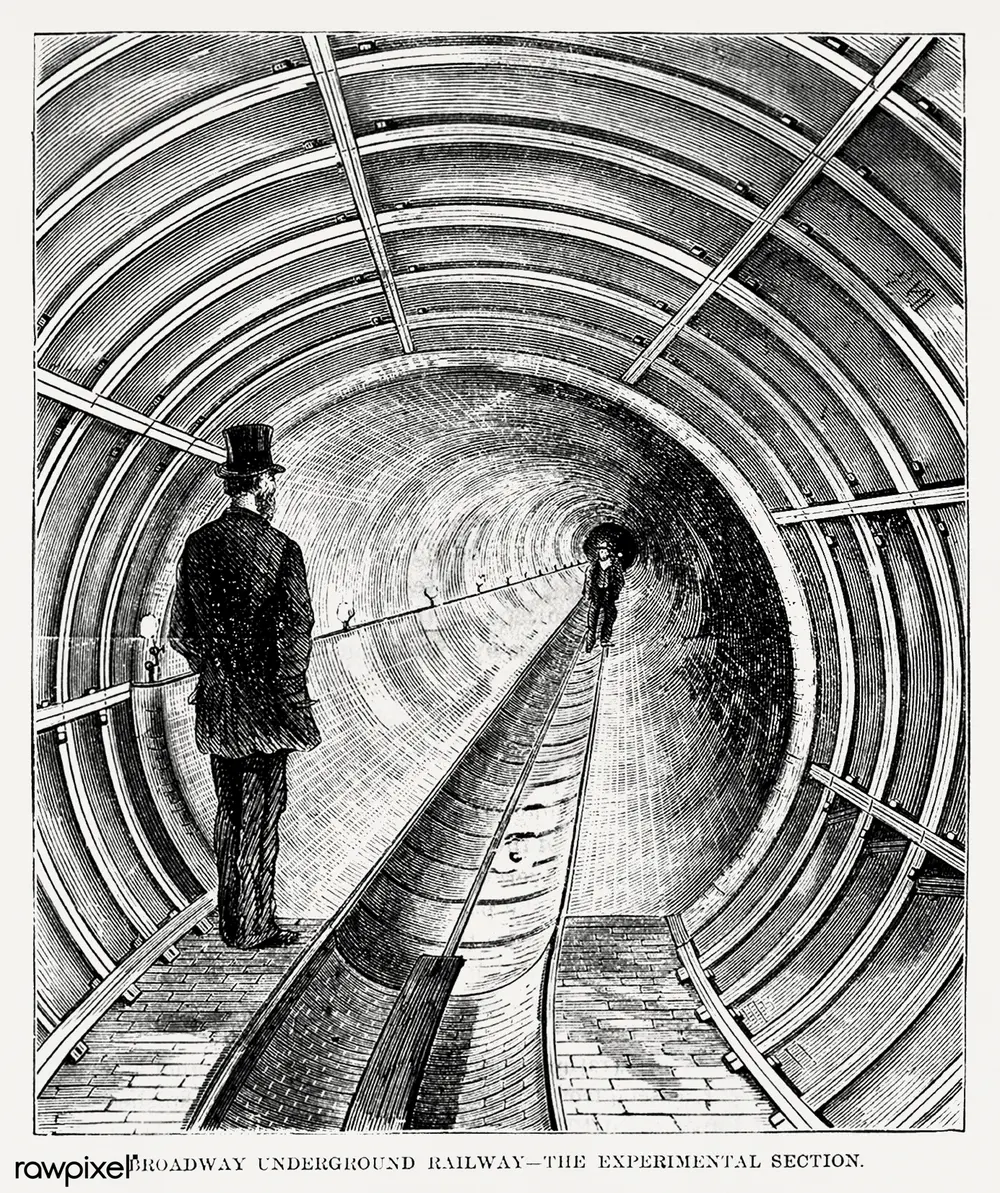
The experimental section — 312 feet of brick, sealed and forgottenIllustrated Description of the Broadway Underground Railway, 1872 • NYPL
"The question isn't whether this happened. The question is how many times it's happened since.
What else worked? What else was buried? What else are we still waiting for that someone already
built and someone else decided we weren't allowed to have?"
The Technology Has Never Been the Problem
Alfred Beach spent $350,000 of his own money to prove underground transit worked. He exposed himself to
political retaliation. Built in secret because the system would never let him build in the open.
400,000 people rode his subway. It worked.
Then he watched it die. Watched the tunnel get bricked up. Watched the city choke on the same traffic
for another 34 years. He died in 1896. His obituary ran a few inches. Two years later, the station burned.
Eight years after that, New York opened a subway and acted like the idea had just been invented.
The N and R trains run beneath Broadway today through tunnels that incorporated what remained of
Beach's original work. Somewhere in those walls, the ghost of that first subway is still there.
The tunnel is gone, but the pattern remains.
And once you see it, you can't unsee it.