Gilded, grinning, holding a mirror and a pen, he has watched the same corner of lower Manhattan for 140 years. Millions pass beneath him. Almost no one looks up. This is what he is holding, and why it was put there.
Descend
I · The Temple
The Building
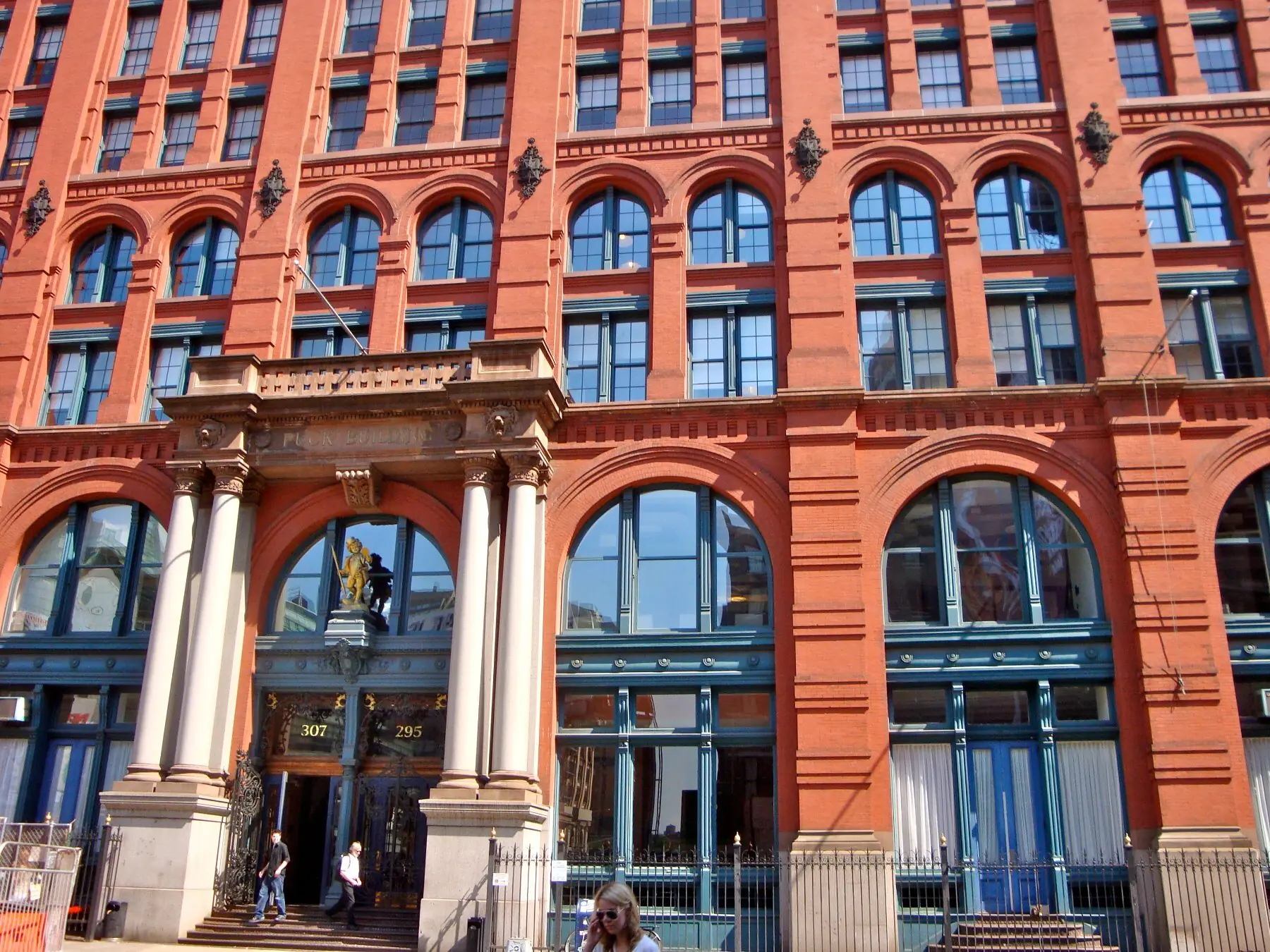
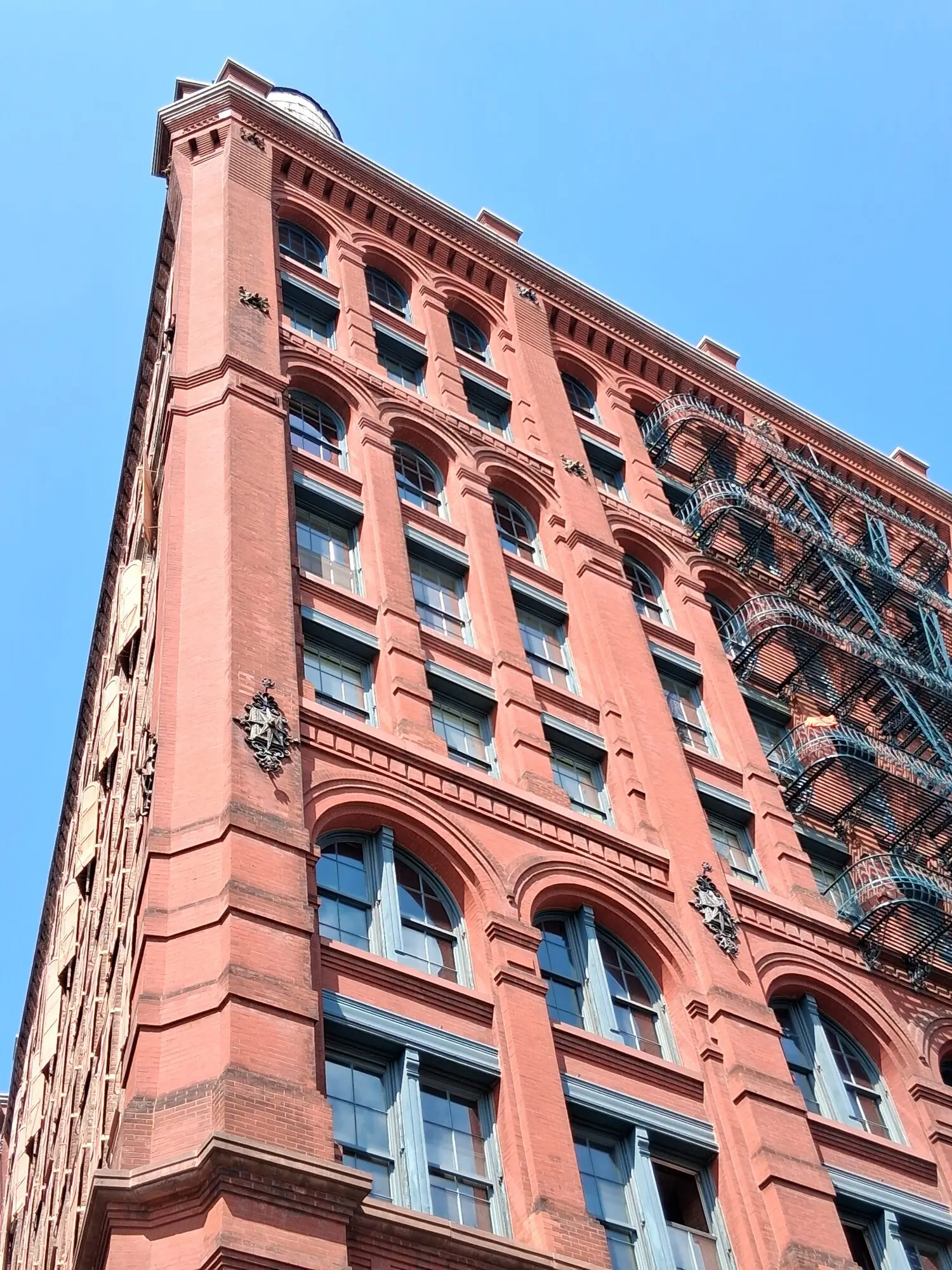
295 Lafayette Street, 1885 — once the largest printing house in the world. There he is, on his pedestal at the corner, two storeys up — exactly where you have to know to look.
The Puck Building occupies an entire city block in lower Manhattan, bounded by Houston, Lafayette, and Mulberry Streets. It was commissioned in 1885 by Joseph Keppler, an Austrian immigrant cartoonist, and Adolph Schwarzmann, a German businessman. They were the founders of Puck Magazine — America's first successful color political satire publication.
The architect, Albert Wagner, trained under Leopold Eidlitz — a Bohemian architect whose work some architectural historians have noted contains symbolic elements that echo Rosicrucian traditions, though the connection remains a matter of interpretation rather than documented fact. Wagner designed the building in Rundbogenstil — a Germanic Romanesque Revival style characterized by repeating arches, smooth facades, and an elegant, almost mystical lightness. The building had its own electricity-generating dynamo. It was self-powered. A sovereign entity within the city.
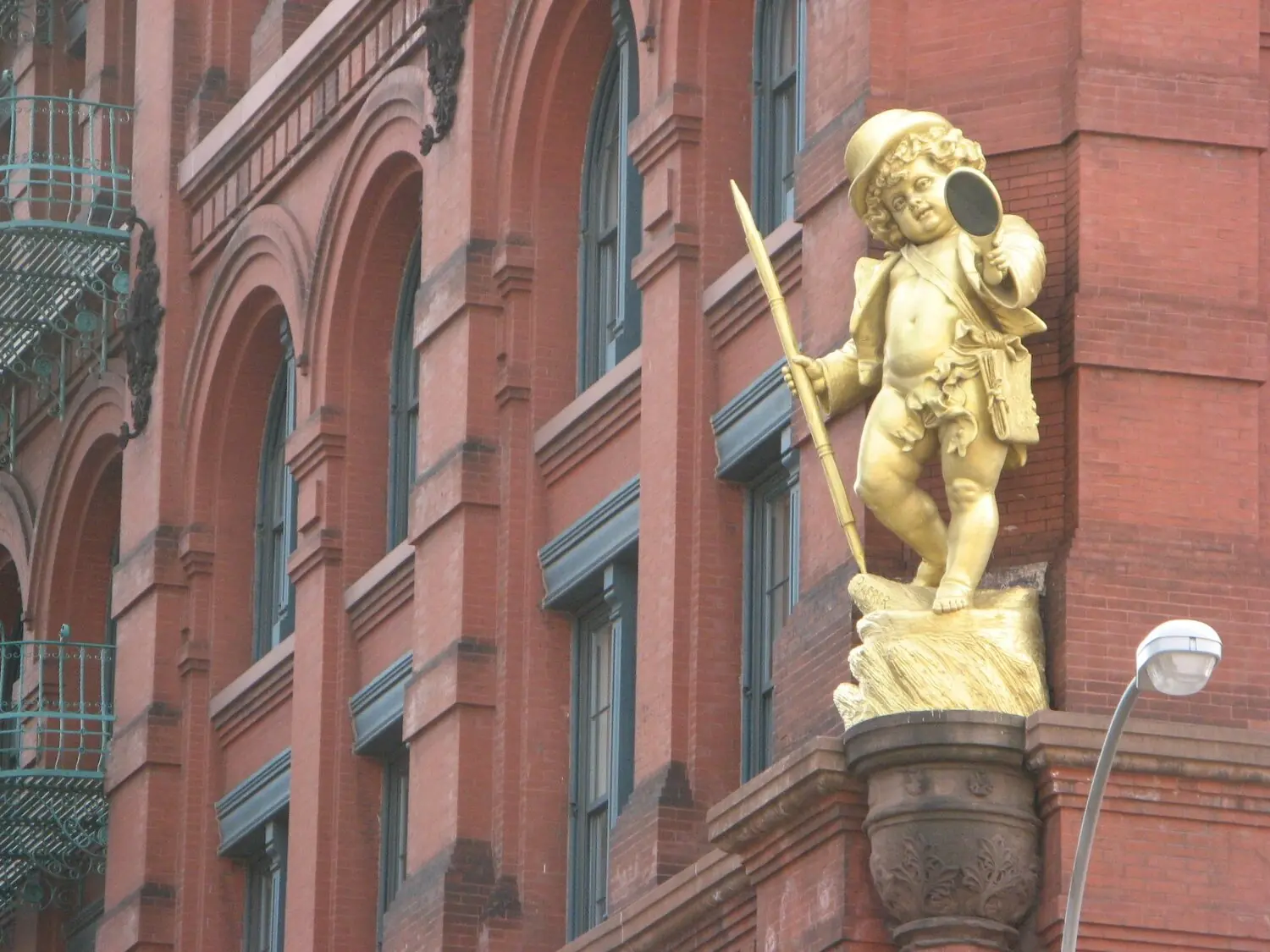
Two gilded gold statues of Puck were mounted on the exterior, sculpted by Henry Baerer (also known for his Beethoven bust in Central Park). The larger one stands above the main entrance on Houston Street. The smaller one — the one that matters — sits above the Lafayette Street entrance, around the third floor. It is deliberately placed where you cannot easily see it from the street. You would have to know to look up.
The Instrument
Mirror, Pen, Book
A mirror in one hand, a pen in the other, a book under his arm. He has been holding them the whole time.
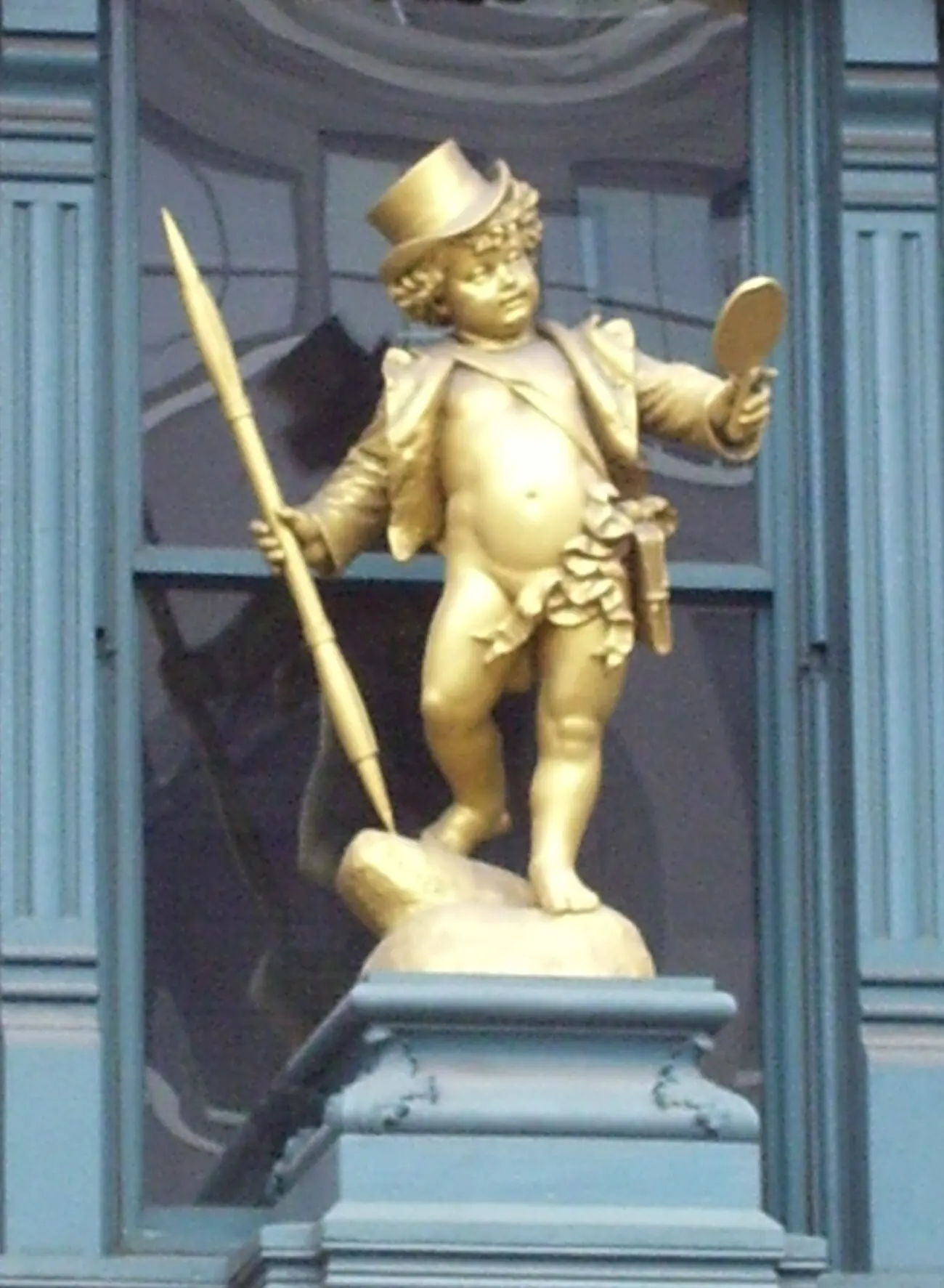
Both statues depict Puck as a fat, naked cherub in a top hat and open frock coat — a Gilded Age dandy. He holds:
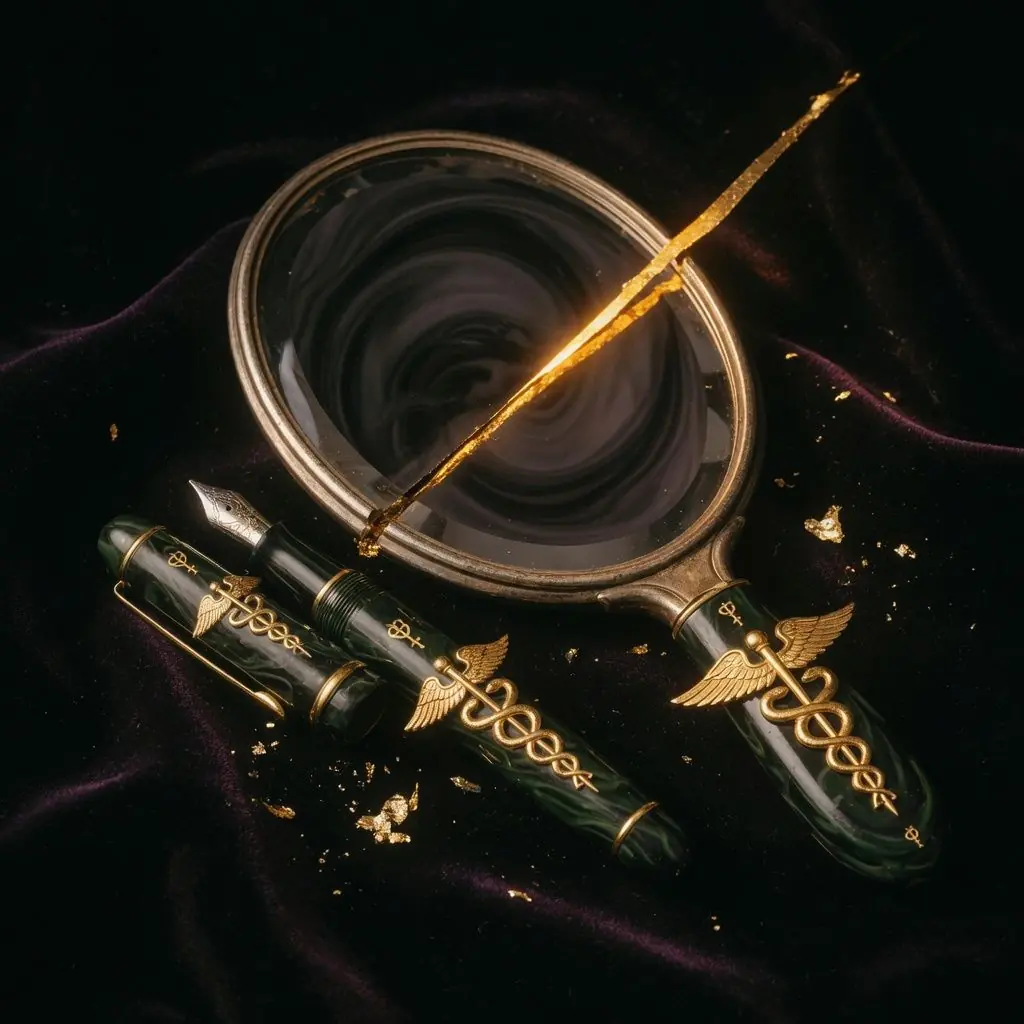
A hand mirror — the alchemical symbol of Mercury, the instrument of reflection and divination
A fountain pen — the weapon of narrative, the caduceus of communication
A book inscribed: "What fools these Mortals be!"
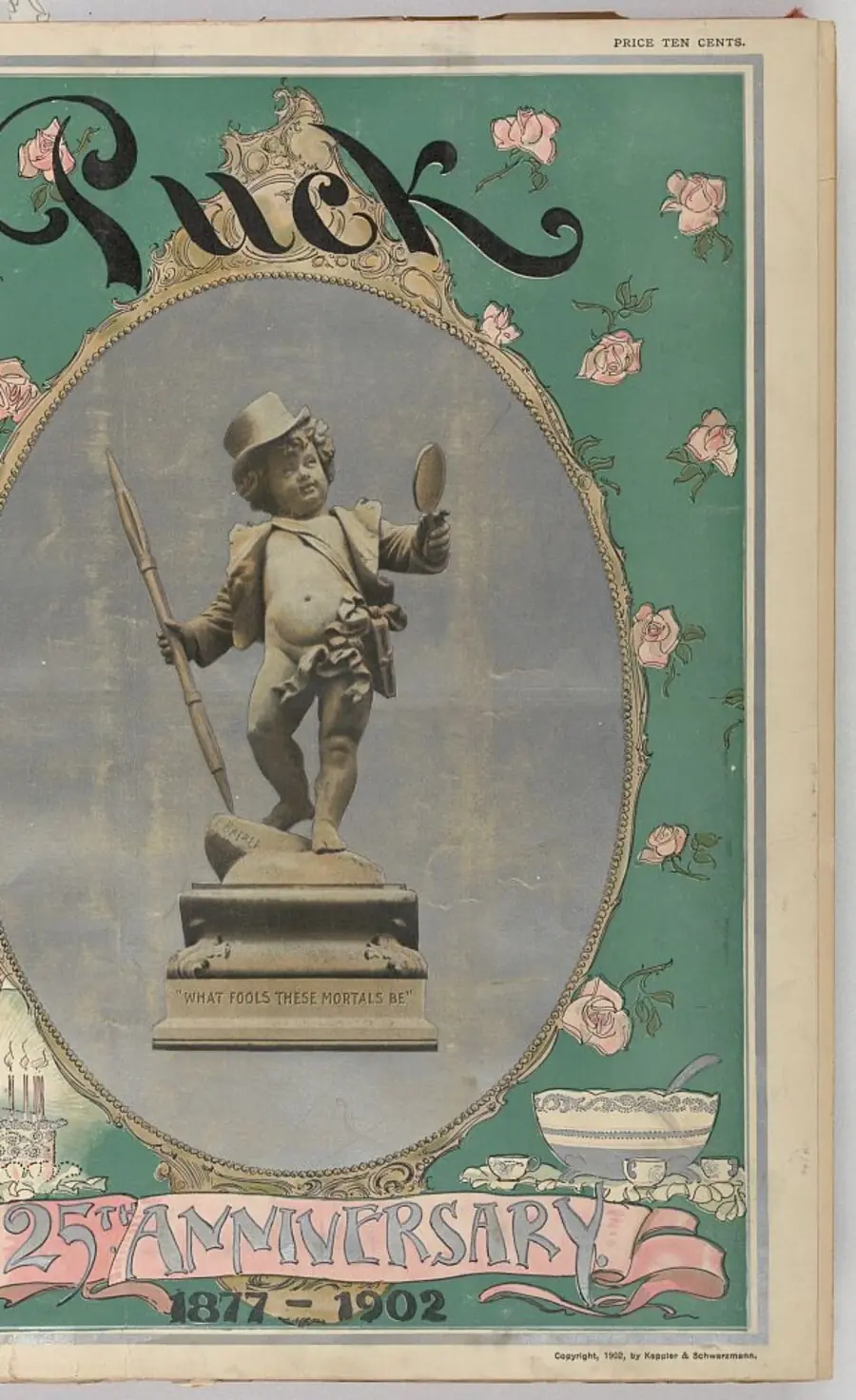
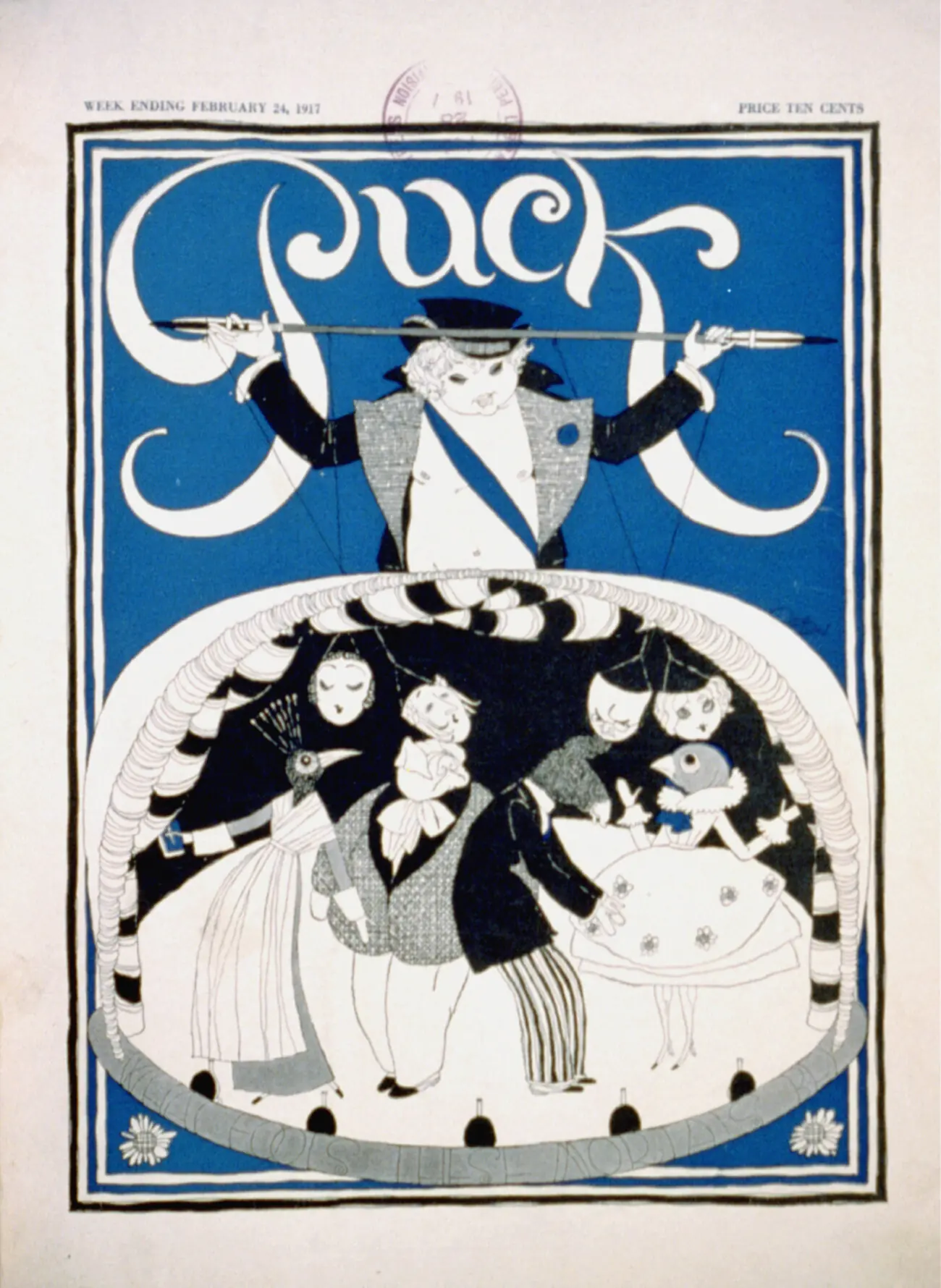
That last line — Puck's verdict on the human beings below — is carved into the pedestal of the statue and was printed on the masthead of every issue for over forty years. The anniversary cover above is not an illustration of an idea. It is a photograph of the actual gilded figure bolted to the building, reproduced by the magazine as its own self-portrait.
Puck's 25th-anniversary cover, 1902
The magazine put a portrait of its own rooftop statue on the front page — pen, mirror, and the line carved into the pedestal: "What fools these mortals be." Library of Congress.
II · The Weapon
The Magazine
Puck (1876–1918) — America's first successful color satirical weekly. Full-page chromolithographs, three cartoons an issue, impossible to ignore.
Puck was not gentle comedy. It was the most feared political weapon of the Gilded Age — the first American magazine to run full-color chromolithographs every week, three to an issue, in an era when most papers were grey columns of type. Vivid, cruel, and impossible to ignore.
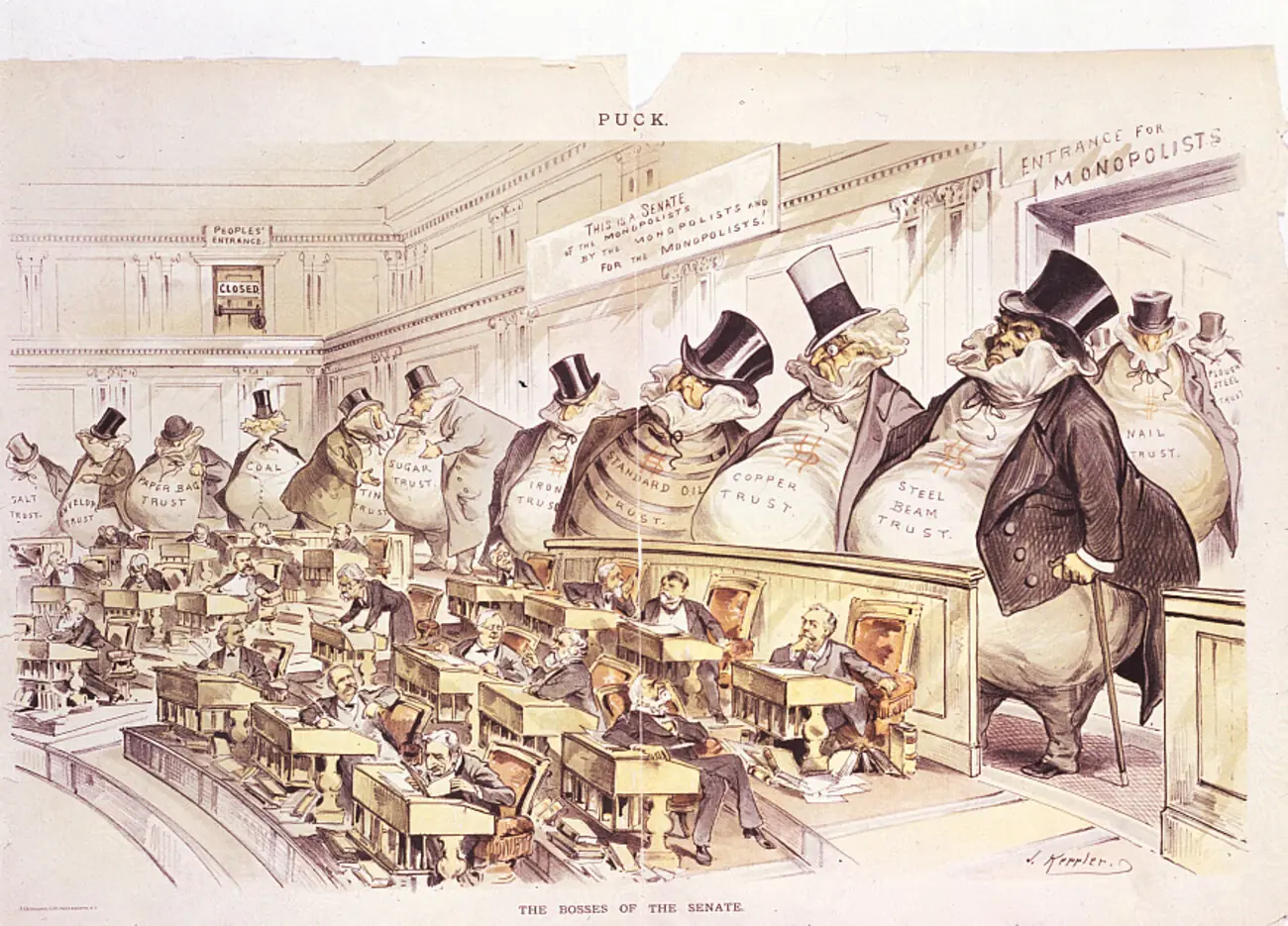
Its targets were systematic: Tammany Hall, the corrupt machine that ran New York. Sitting presidents, drawn small and ridiculous. And above all the corporate trusts — the monopolies Keppler turned into the visual language every American still uses for them.
"The Bosses of the Senate"
Joseph Keppler, Puck, Jan 23 1889. The trusts as bloated moneybags towering over the Senate; the public entrance is marked "Closed." Library of Congress, no known restrictions.
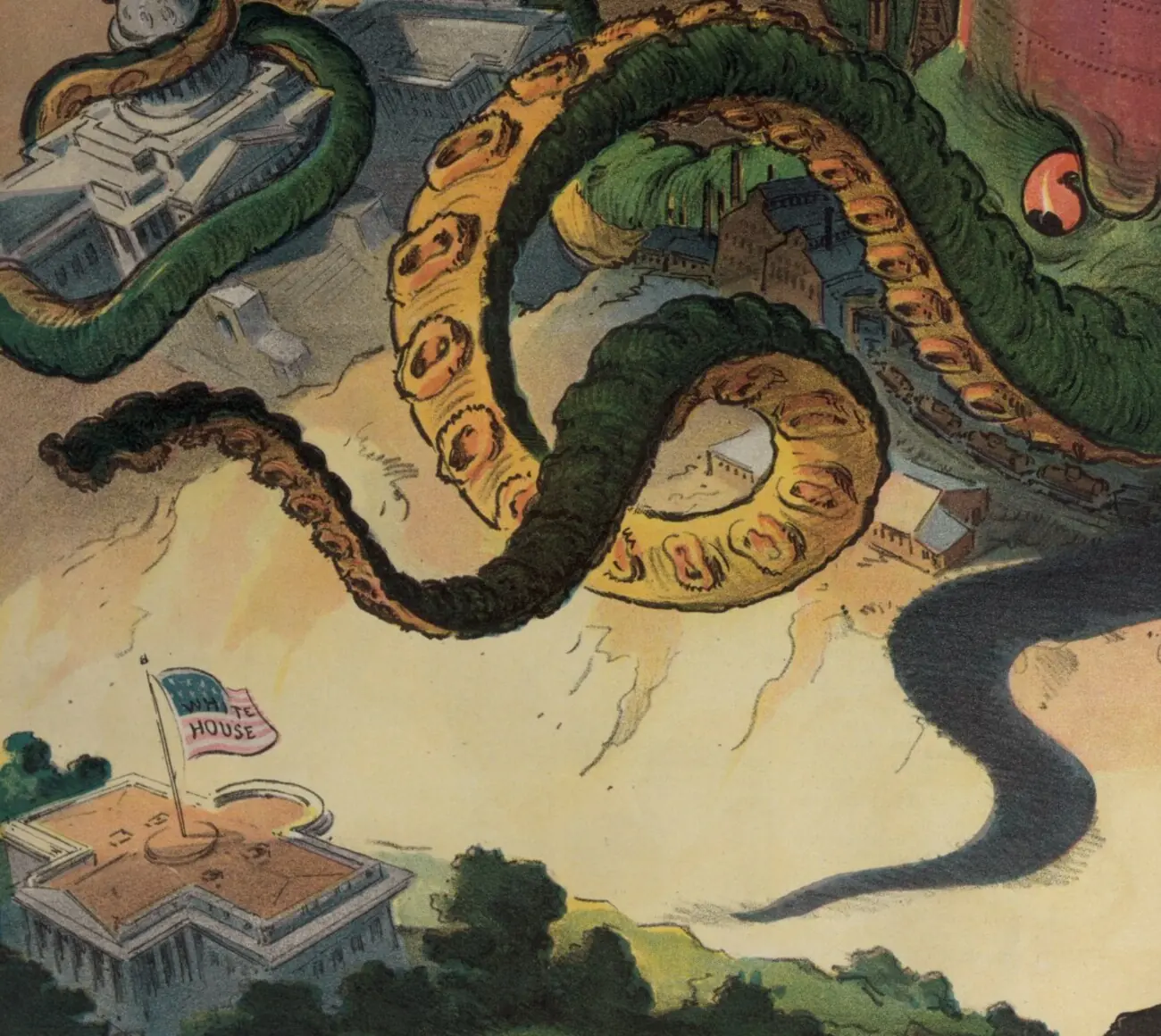
Fifteen years later Puck gave the country its most enduring image of monopoly — Standard Oil as an octopus, one tentacle around each statehouse and one reaching for the Capitol. The pen drew the picture; the picture became the argument.
"Next!"
Udo J. Keppler, Puck, Sep 7 1904 (detail). Standard Oil as an octopus coiled around the statehouses, reaching for Washington. Library of Congress, no known restrictions.
For three decades this was Puck's main quarry. Week after week the trusts were drawn as giants, parasites, and thieves — the visual grammar of American anti-monopoly politics was invented on these pages.
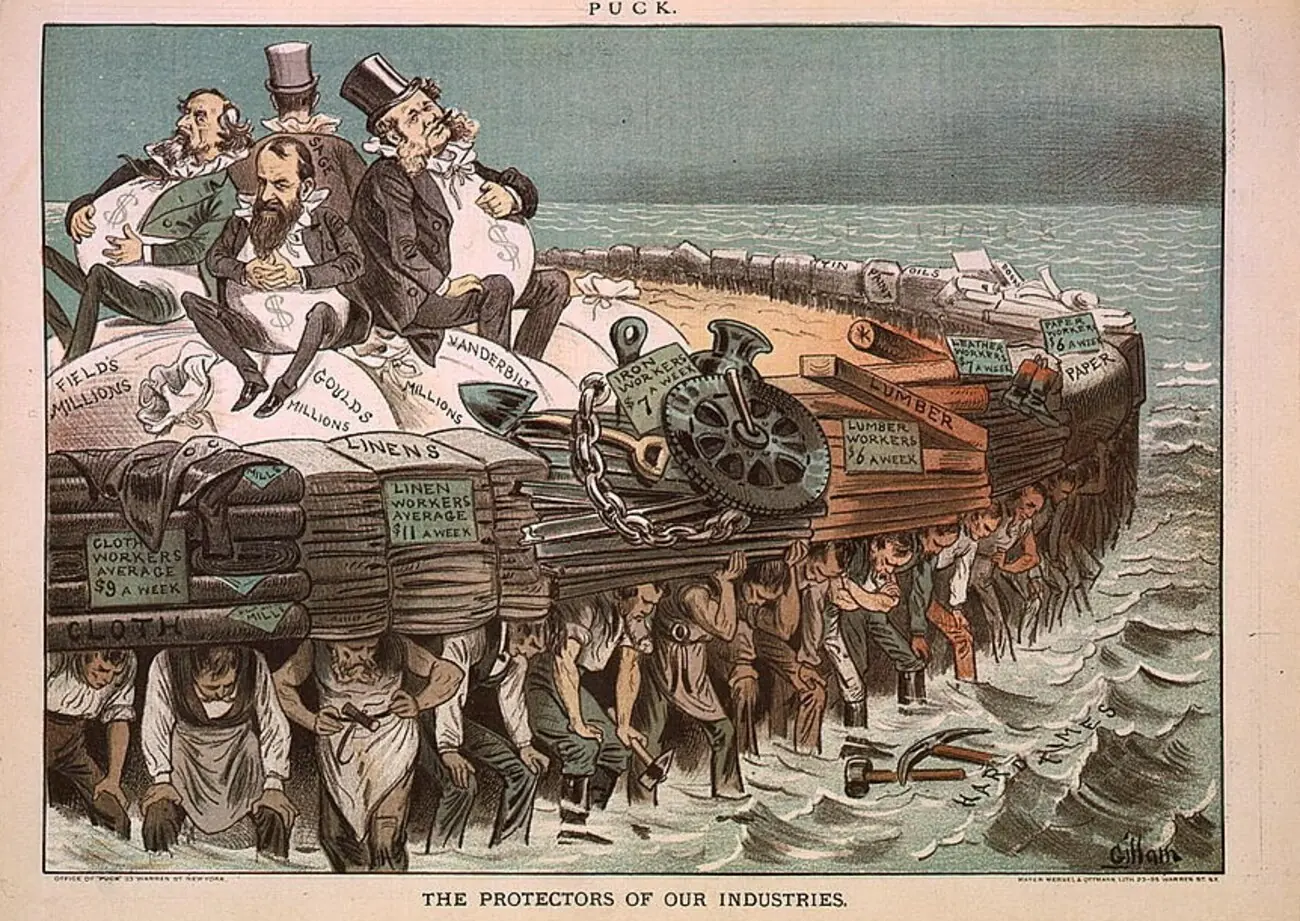
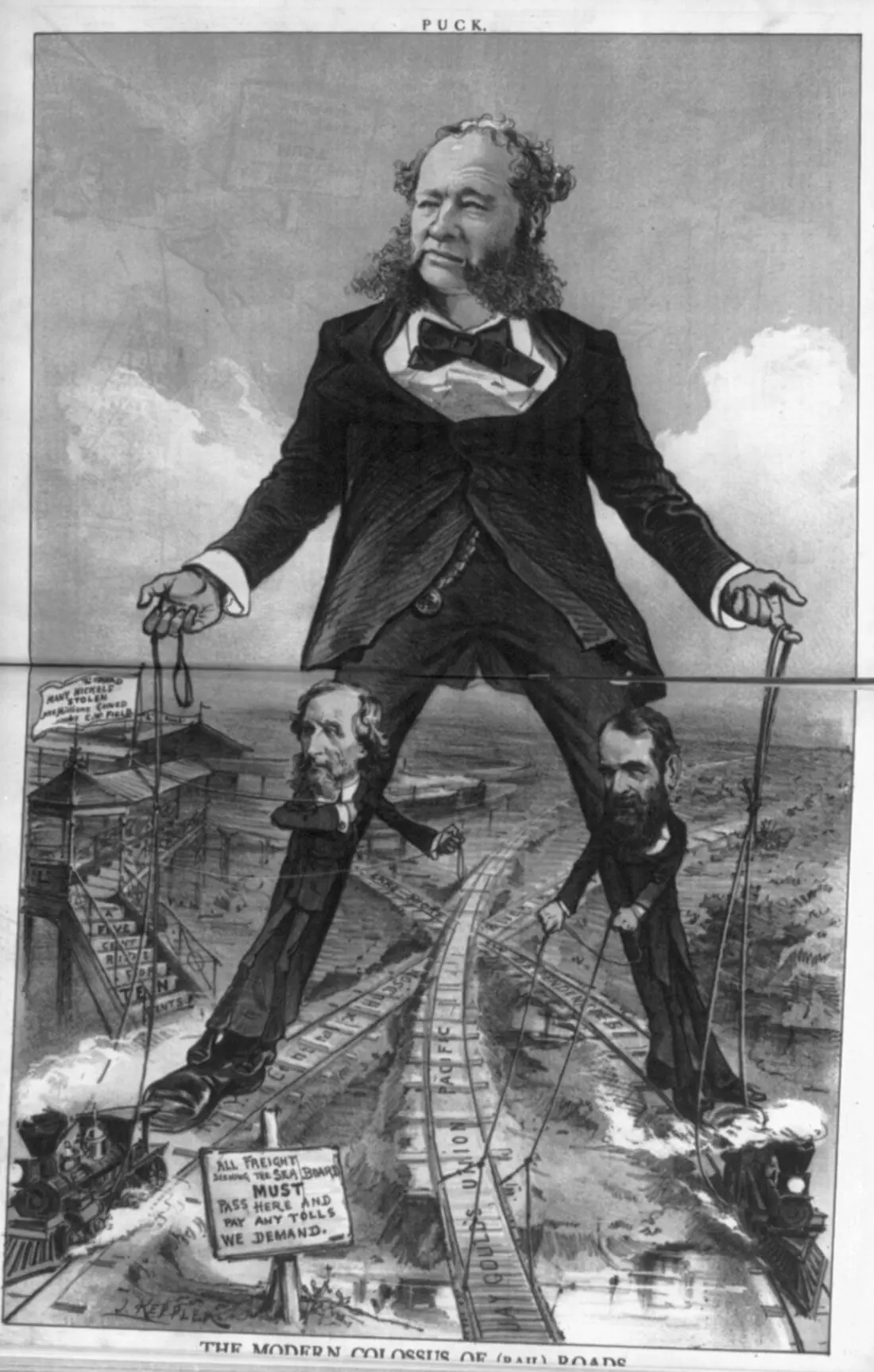
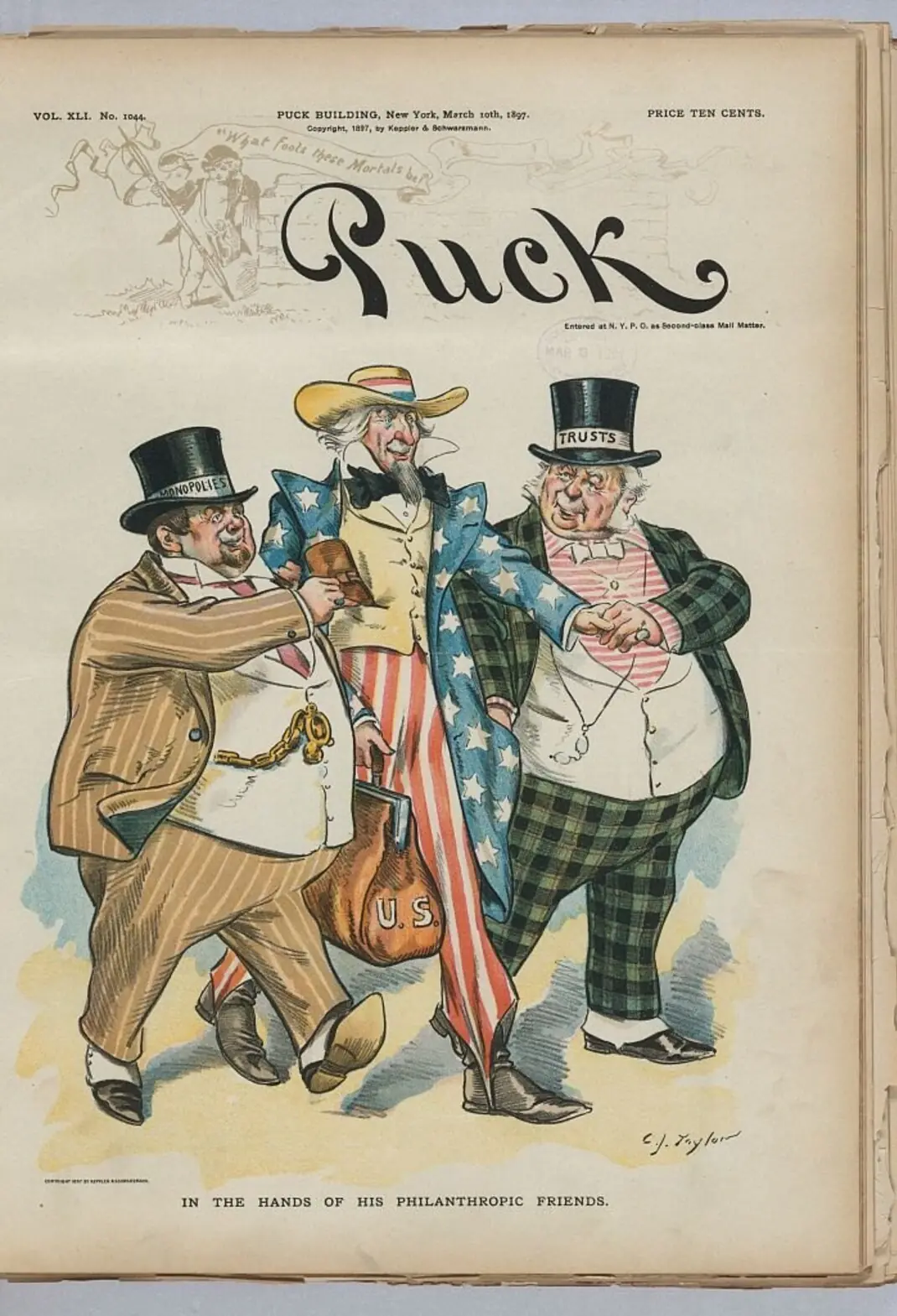
"The Protectors of Our Industries"Bernhard Gillam, 1883 — the magnates lounge on their millions; the bales beneath them are labeled "Cloth workers — average $9 a week.""The Modern Colossus of (Rail) Roads"Joseph Keppler, 1879 — Vanderbilt as a colossus straddling the railroads, the reins of the nation in his fists."In the Hands of His Philanthropic Friends"C.J. Taylor, 1897 — Uncle Sam, arms pinned, emptied out by the men in the top hats marked Trusts.
All plates: Library of Congress Prints & Photographs Division — no known restrictions on publication.
But Puck also turned the same pen on the Irish Catholic immigrant community — the very population packed into the tenements around the building. The same neighborhoods whose children were being loaded onto orphan trains at nearby depots in those exact years. The overlap is uncomfortable: one instrument shaped the perception ("these people are fools"), while another carried out the consequence ("therefore their children must be removed and saved"). The pen names. The mirror reflects contempt. Both are held by a golden figure who sits above the street, watching.
In 1986, the Kushner Companies acquired the building. In 2011, the Landmarks Commission approved six luxury penthouses on the upper floors — Italian marble baths, mahogany-framed windows, televisions inside mirrors. The building that mocked power is power now. The satirist's weapon became the oligarch's residence.
The golden Puck still sits on the third floor. The inscription hasn't changed.
III · The Dream
The Play
A Midsummer Night's Dream (c. 1595). Five layers of reality, each mocking the one below — and love-in-idleness, the flower that rewrites what you love.
Shakespeare set his play on Midsummer's Eve — the summer solstice — the one night in every pre-Christian European tradition when the veil between the human world and the spirit world is thinnest. And what happens? Humans stumble into the fairy realm without knowing it, are manipulated without their awareness, and return thinking they had a dream.
SurfaceAthens — The City of Rules
Theseus's court. Law, marriage contracts, paternal authority. The world of social agreements and enforced order. This is where most people live — believing the rules are reality. The lovers think they're making choices. They flee into the forest voluntarily. They don't know what's waiting.
ShallowsThe Forest — The Enchanted Zone
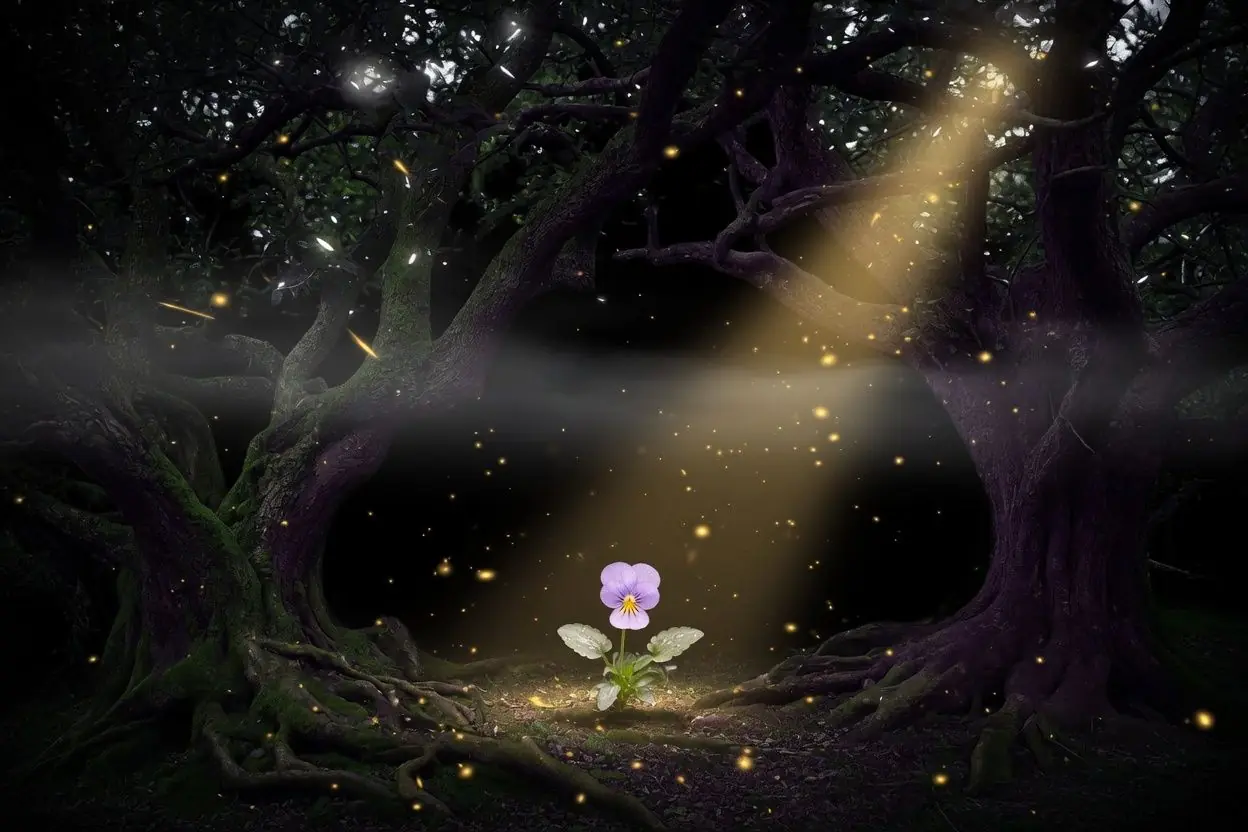
The lovers enter the forest thinking they're still in control. But Oberon and Puck are already watching. The flower "love-in-idleness" — a wild pansy whose juice, placed on sleeping eyelids, makes the sleeper fall in love with the next thing they see. Not a metaphor. A description of perception alteration through a botanical agent applied during an altered state of consciousness. The name itself: love born from IDLENESS, from not paying attention, from sleep.
CurrentThe Fairy Court — The Invisible Government
Oberon and Titania quarrel over a changeling boy — a human child stolen from India, the child of a dead priestess. The entire conflict between the fairy king and queen revolves around possession of a human specimen. This happens entirely offstage. We never see the boy. He is an object of contention between non-human powers, never consulted, never heard. The hidden mechanism that drives everything visible.
DeepBottom's Transformation — The Human Condition
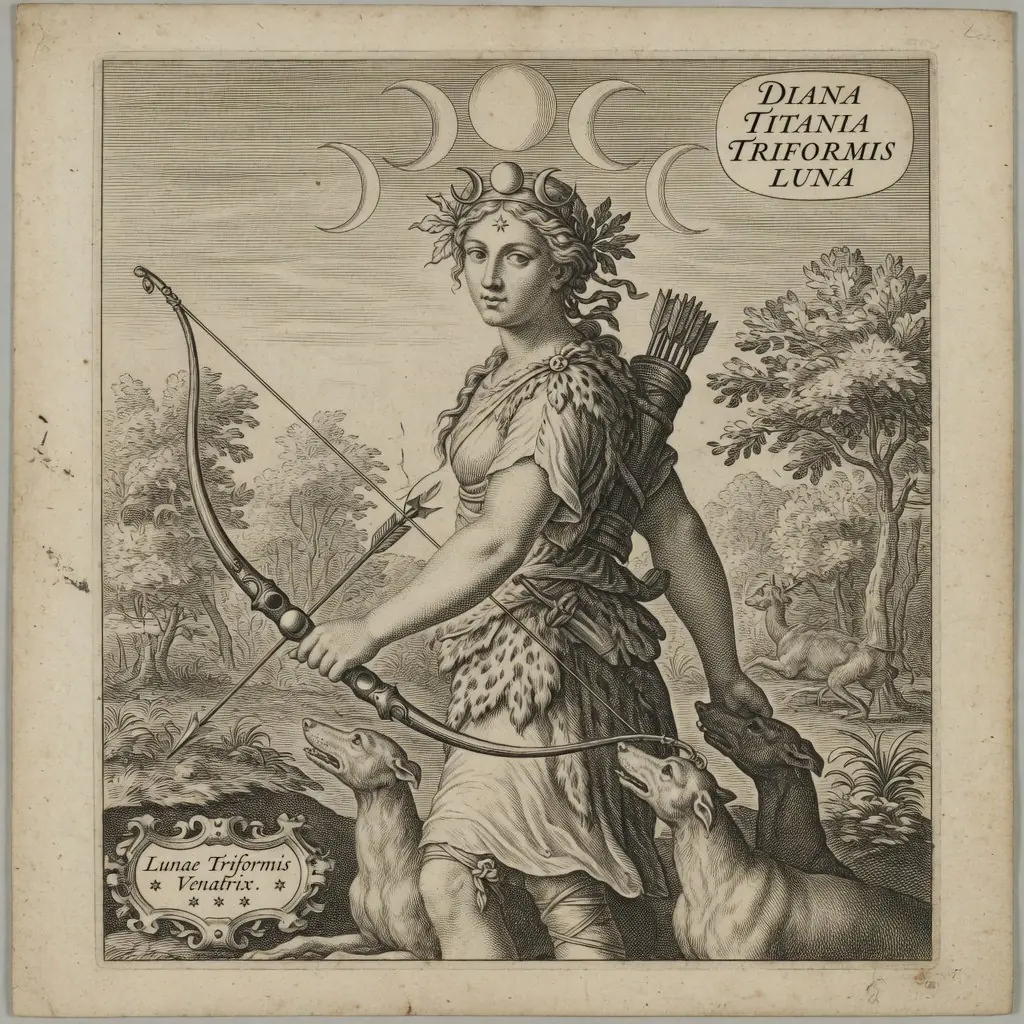
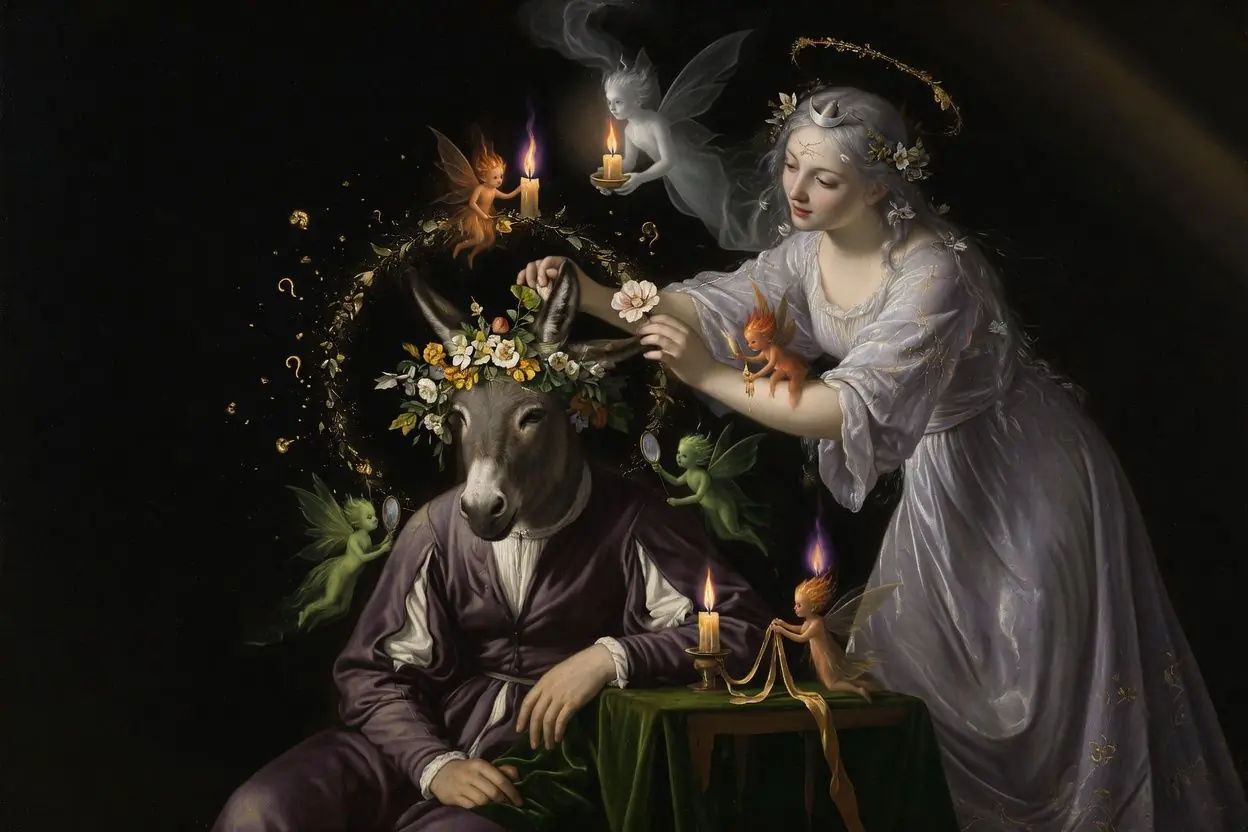
Nick Bottom is transformed into a donkey by Puck. He doesn't know it happened. He can't see his own transformation. His friends flee in terror, and he thinks THEY'RE acting strange. Then Titania — the fairy queen, whose name comes from Ovid's Metamorphoses as another name for Diana, the moon goddess, who is Isis in the Egyptian tradition — wakes up enchanted and declares him beautiful. A man made beast, worshipped by a goddess, attended by elemental spirits, accepting it all as normal. This is us.
FloorPuck's Epilogue — The Being Outside
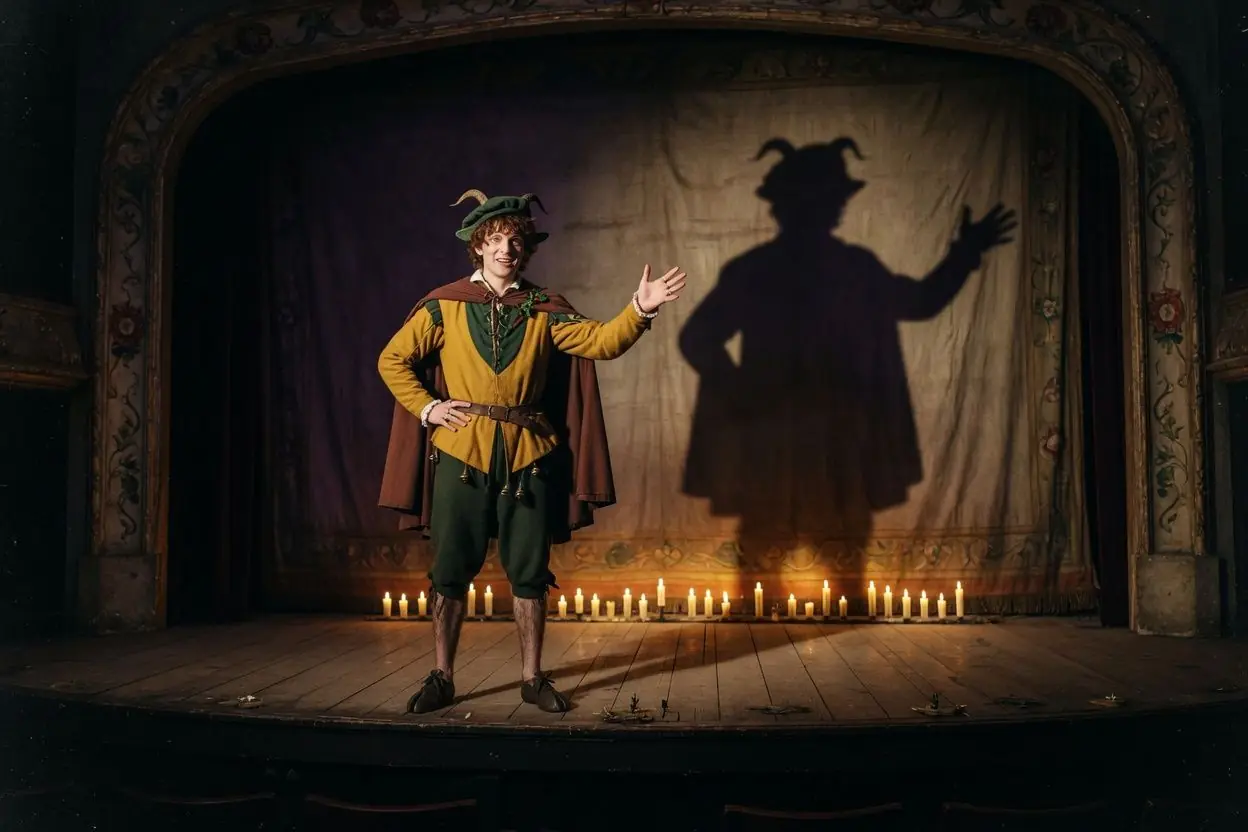
Puck stands alone on stage. He addresses the audience directly. He tells them they have been sleeping. He calls the entire play — Athens, the forest, the fairy realm, all of it — "a weak and idle theme, no more yielding but a dream." He asks for applause. Every audience that has ever watched this play has clapped. They are told they are dreaming, and their response is to give their energy, their consent, their belief. What fools these mortals be.
IV. The Chain
The Hidden Sources
One thread, five thousand years, always the same message.
The question of Shakespeare's authorship remains one of literary history's enduring debates. The official literary sources of A Midsummer Night's Dream require fluency in Latin, Greek, and Italian, and draw on untranslated texts — a breadth of erudition that has fueled centuries of speculation about who really wrote the plays. But the esoteric sources go far deeper.
c. 8 AD
Ovid's Metamorphoses
Publius Ovidius Naso
Titania is explicitly another name for Diana — the moon goddess, goddess of wild places, the triple goddess. Shakespeare pulled the name directly from Ovid. Diana = Artemis = Isis. The goddess chain that underpins the entire Western mystery tradition.
c. 170 AD
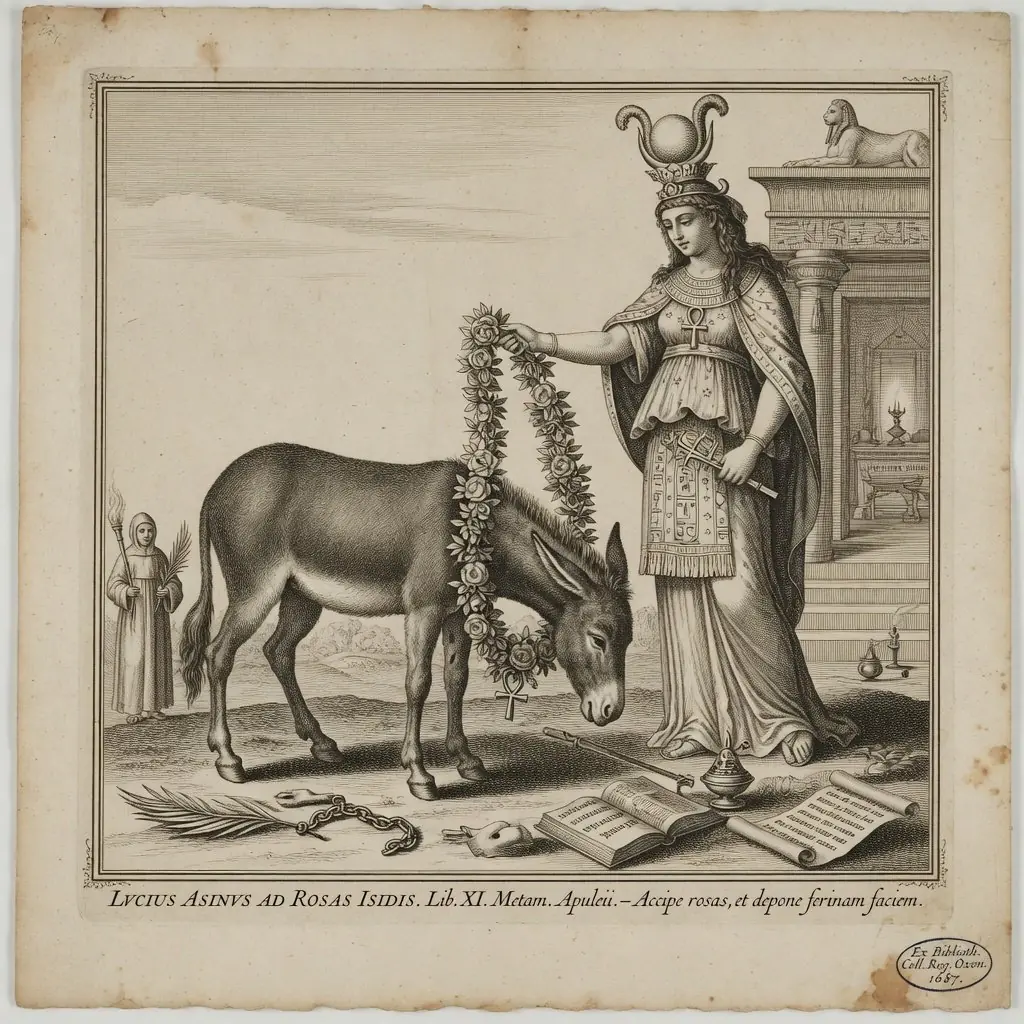
The Golden Ass
Apuleius
An initiation text disguised as a novel. Lucius is transformed into a donkey — trapped in animal consciousness — and can only be restored by eating roses given by the goddess Isis. Bottom's transformation directly mirrors Lucius's journey. The ass = the human condition. The rose = gnosis. The goddess = liberation.
c. 1530
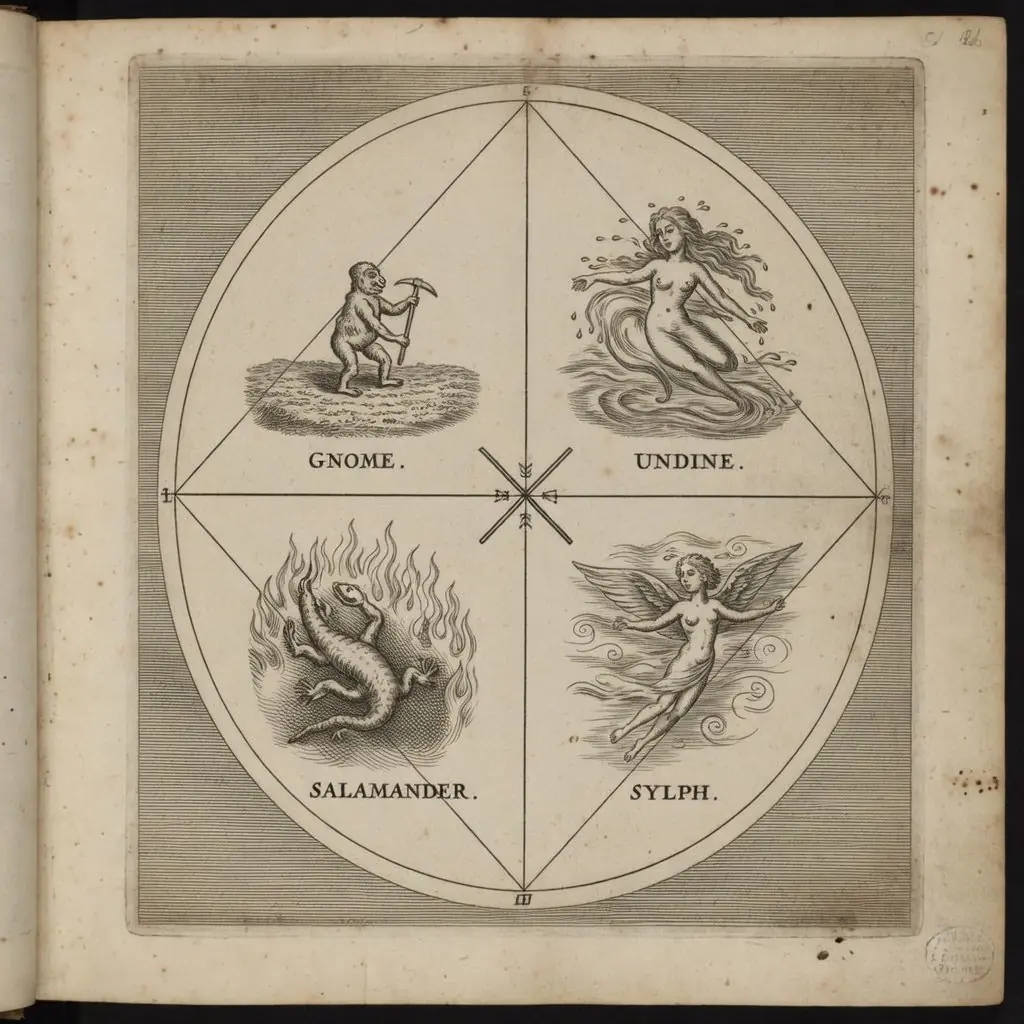
De Nymphis & Elementals
Paracelsus
Four categories of invisible elemental beings: Gnomes, Undines, Sylphs, Salamanders. They have no souls — they can only acquire souls by mating with humans. Titania's love for Bottom: the elemental seeking union with the human. The fairy court is Paracelsian doctrine made dramatic.
Pre-Christian
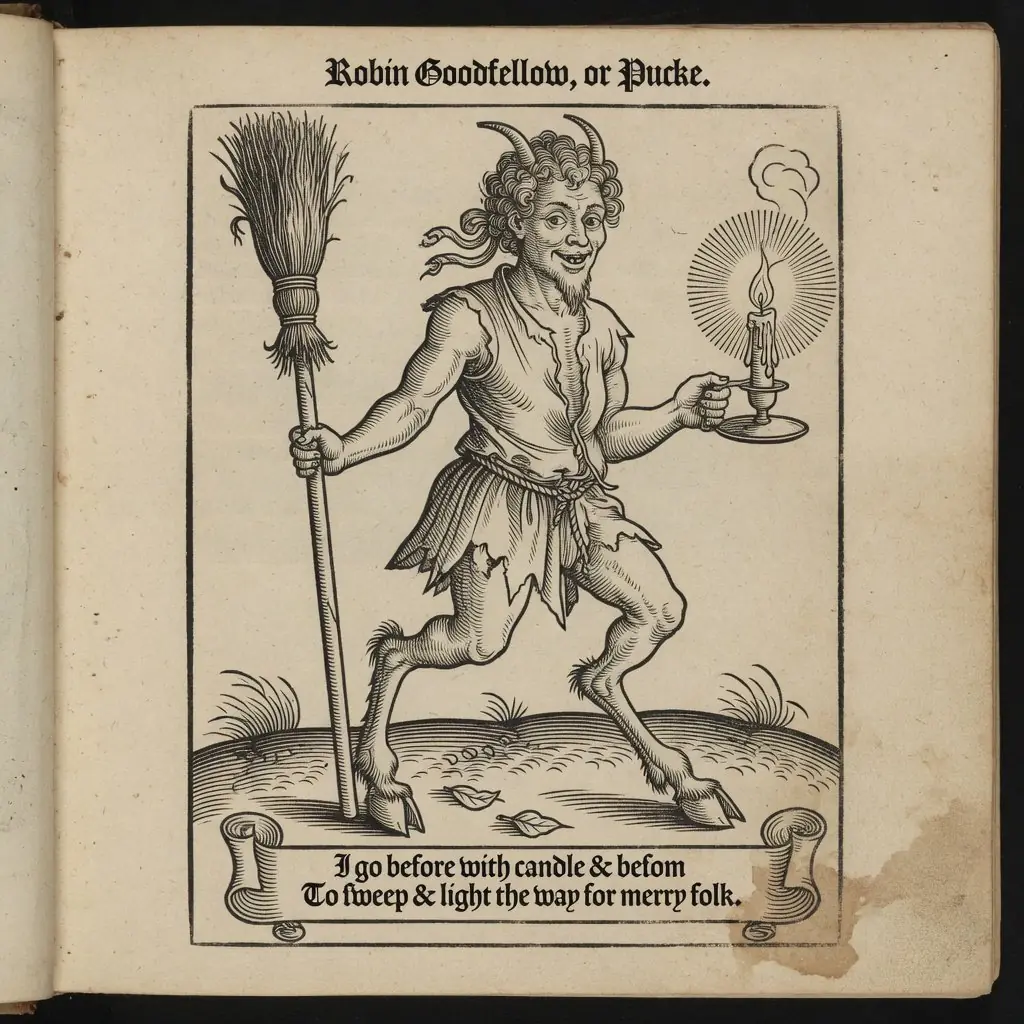
Puck / Púca Folklore
Pan in English clothes
Old English puca, Old Norse púki, Irish púca, Welsh pwca. The 1639 illustration shows Robin Goodfellow with goat legs, cloven hooves, and horns. This is Pan — the god of wild nature, whose name means "ALL." Demonized by Christianity into the Devil. Shakespeare put a pre-Christian nature deity at the center of his comedy.
c. 1595–1623
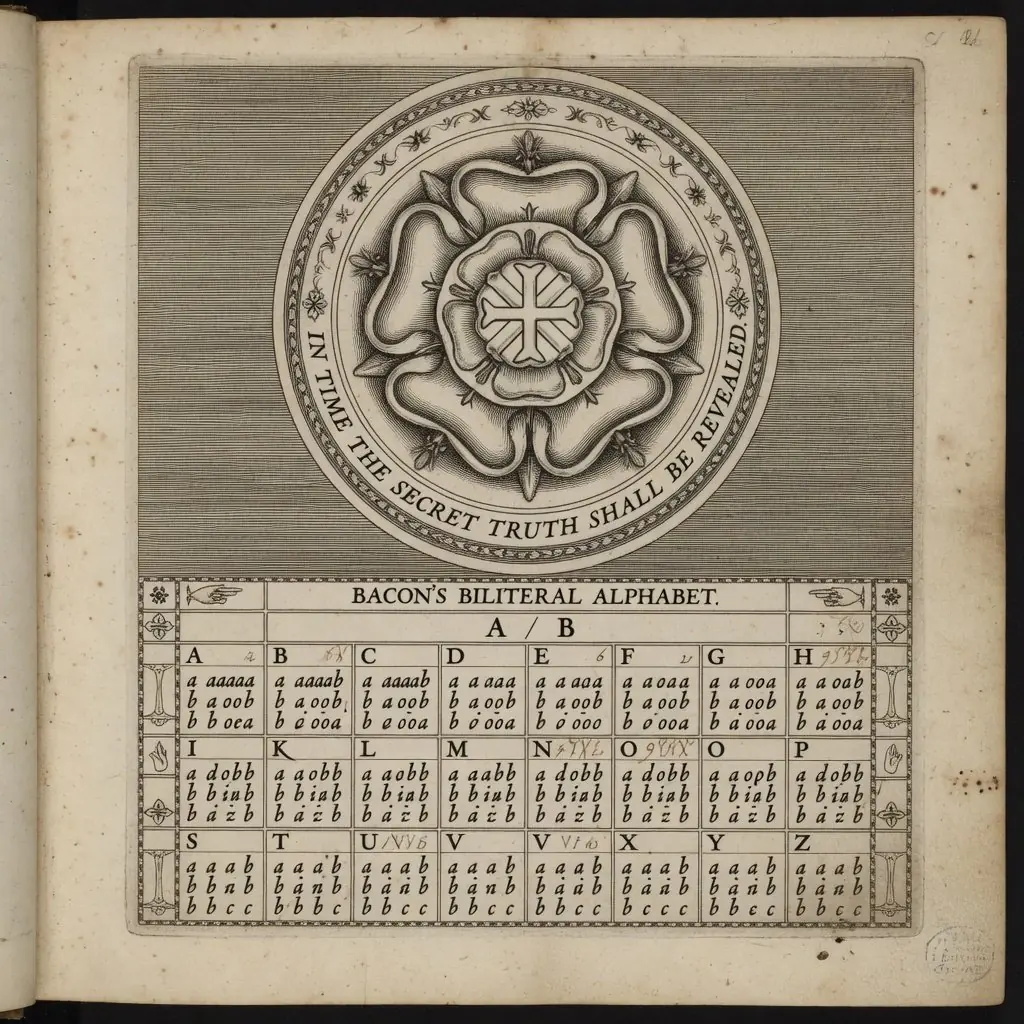
The Rosicrucian Ciphers
Francis Bacon (?)
Manly P. Hall wrote: "Who but one deeply versed in Paracelsian lore could have conceived A Midsummer Night's Dream?" Proponents of the Baconian theory point to cipher number 33, acrostic signatures, biliteral ciphers, and deliberate mispaginations in the First Folio — claims that mainstream scholars have largely rejected but that continue to fascinate. Bacon's New Atlantis title page reads: "In time the secret truth shall be revealed."
V · The Instrument
The Mirror and the Pen
Mercury's attributes. The speculum and the pen — the power to show reality and the power to name it.
The gold Puck holds a mirror. In alchemical tradition, the mirror is the attribute of Mercury / Hermes — the messenger god, the trickster, the psychopomp who guides souls between worlds. Hermes rules communication, commerce, theft, and the crossing of boundaries. He is the god of both merchants and thieves — because in the esoteric view, they are the same thing.
Puck is Hermes in English folk dress. Robin Goodfellow is the English Mercury — the boundary-crosser, the shape-shifter, the being who moves between the human world and the spirit world at will.
The mirror is the speculum — the scrying glass, the instrument of divination. He sees the future in it. He sees the truth in it. And he holds it toward the street, offering reflection to anyone who would look up. No one does.
The pen is Mercury's other attribute — the power of the word, the naming of reality. Words shape perception. The pen and the mirror together: the power to name reality and the power to show reality. Both held by a being gilded in gold — the alchemical metal of the Sun, of perfected consciousness — looking down at lead, the base metal, the unawakened human below.
Alchemy is not about turning lead into gold. It is about turning you into someone who looks up.
VI · The Bottomless
Bottom's Dream
A man made beast, worshipped by a goddess, accepting it all as normal. This is us.
When Bottom wakes from his transformation, he almost grasps what happened to him. Almost. He delivers one of the most extraordinary speeches in all of Shakespeare:
"The eye of man hath not heard, the ear of man hath not seen, man's hand is not able to taste, his tongue to conceive, nor his heart to report, what my dream was. I will get Peter Quince to write a ballad of this dream: it shall be called Bottom's Dream, because it hath no bottom."
— A Midsummer Night's Dream, Act 4, Scene 1
He deliberately scrambles the senses — eye/heard, ear/seen, hand/taste, tongue/conceive. This is not comic incompetence. This is a precise description of an experience that cannot be processed through normal human perception. He touched something real, and the only way to describe it is through broken language.
The speech is a direct inversion of 1 Corinthians 2:9: "Eye hath not seen, nor ear heard, neither have entered into the heart of man, the things which God hath prepared for them that love him." Paul describes divine revelation. Shakespeare takes the same structure and puts it in the mouth of a man who was literally an ass being worshipped by a fairy queen — and scrambles it. The mystical experience described in scripture is real, but humans process it as nonsense, as a dream, as jumbled senses.
And the name: Bottom's Dream, because it hath no bottom. The dream is bottomless — it goes infinitely deep. The man named Bottom is telling you this. The wordplay is a cipher. It hath no bottom. There is no floor. Or rather: the floor is the recognition that there is no floor.
VII · The Address
The Epilogue
Puck speaks directly to you. He always has been. He tells you you've been sleeping — then asks for your hands. Every audience claps.
"If we shadows have offended,"
The actors are "shadows" — not real. Projections. Simulacra. He names the illusion.
"Think but this, and all is mended,"
Thinking — changing your perception — is all that's required to fix everything. Reality is consensual.
"That you have but slumber'd here"
You have been sleeping. Not the characters. You. The audience. The reader. Right now.
"While these visions did appear."
Everything you perceived was a vision — a managed experience delivered to a sleeping subject.
"And this weak and idle theme,"
"Idle" — the same word from "love-in-idleness," the flower that alters perception. The play itself is the flower.
"No more yielding but a dream,"
The entire play, the building, the statue, this page, your life — a dream. No more yielding but a dream.
"Give me your hands, if we be friends,"
Applause. Consent. Energy transfer. "Clap if you believe in fairies." You're told you're dreaming and your response is to participate.
"And Robin shall restore amends."
Robin Goodfellow. Pan. Mercury. The trickster promises to make it right — if you give him your energy first.
VIII · The Thread Continues
Look Up
The play never ended. The building still stands. The inscription hasn't changed. The truth is not hidden — it is elevated.
A golden figure sits on the third floor of a building in lower Manhattan. Millions walk past it every year. Almost no one looks up. The truth is not hidden — it is elevated.
250,000 children. 75 years. One ancient pattern. Perhaps the boundary between history and myth is thinner than we've been taught.
Sources & Further Reading
References
• Shakespeare, William. A Midsummer Night's Dream (c. 1595–96). Arden Shakespeare, Third Series.
• Apuleius. The Golden Ass (Metamorphoses). Trans. Sarah Ruden. Yale University Press, 2011.
• Ovid. Metamorphoses. Trans. Charles Martin. W.W. Norton, 2004.
• Hall, Manly P. The Secret Teachings of All Ages. Philosophical Research Society, 1928.
• Paracelsus. A Book on Nymphs, Sylphs, Pygmies, and Salamanders, and on the Other Spirits (c. 1530).
• Shapiro, James. Contested Will: Who Wrote Shakespeare? Simon & Schuster, 2010.
• O'Connor, Stephen. Orphan Trains: The Story of Charles Loring Brace and the Children He Saved and Failed. University of Chicago Press, 2004.
• New York City Landmarks Preservation Commission. Puck Building Designation Report. LP-1277, 1983.
• Schechter, Harold. The Devil's Gentleman: Privilege, Poison, and the Trial That Ushered in the Twentieth Century. Ballantine, 2007. (On Gilded Age NYC culture.)
• Briggs, Katharine. The Anatomy of Puck: An Examination of Fairy Beliefs Among Shakespeare's Contemporaries and Successors. Routledge, 1959.