On the night of March 2, 2012, two herds of wild elephants began to walk.
They had not been called. No one had sent word. The man they were walking toward had died just hours before, in his home on the Thula Thula game reserve in KwaZulu-Natal, South Africa. His family hadn't even made the announcement yet.
The elephants walked for twelve hours. Through the bush, in the dark, over terrain they had not crossed in more than a year. Two separate herds that rarely encountered each other. Both headed for the same place.
When they arrived at Lawrence Anthony's house, they stood outside. And for two days, they did not leave.
The Man
Lawrence Anthony was not a scientist. He was not an animal trainer. He was a conservationist who ran a private game reserve, and in 1999, he agreed to take in a herd of elephants that everyone else had given up on.
The herd was traumatized. They had watched family members shot. They had been relocated multiple times. They were aggressive, unpredictable, and the authorities had scheduled them for culling — a bureaucratic word for execution.
Anthony said he would take them. He had one condition: give me time.
“The more time you spend with elephants, the more you realize that the standard scientific model of animal behavior is hopelessly inadequate.”
— Lawrence Anthony, The Elephant Whisperer
The Method
What Anthony did was not what anyone expected.
He did not sedate them. He did not use food rewards. He did not attempt to establish dominance. He did something that, from the outside, looked like nothing at all.
He sat with them.
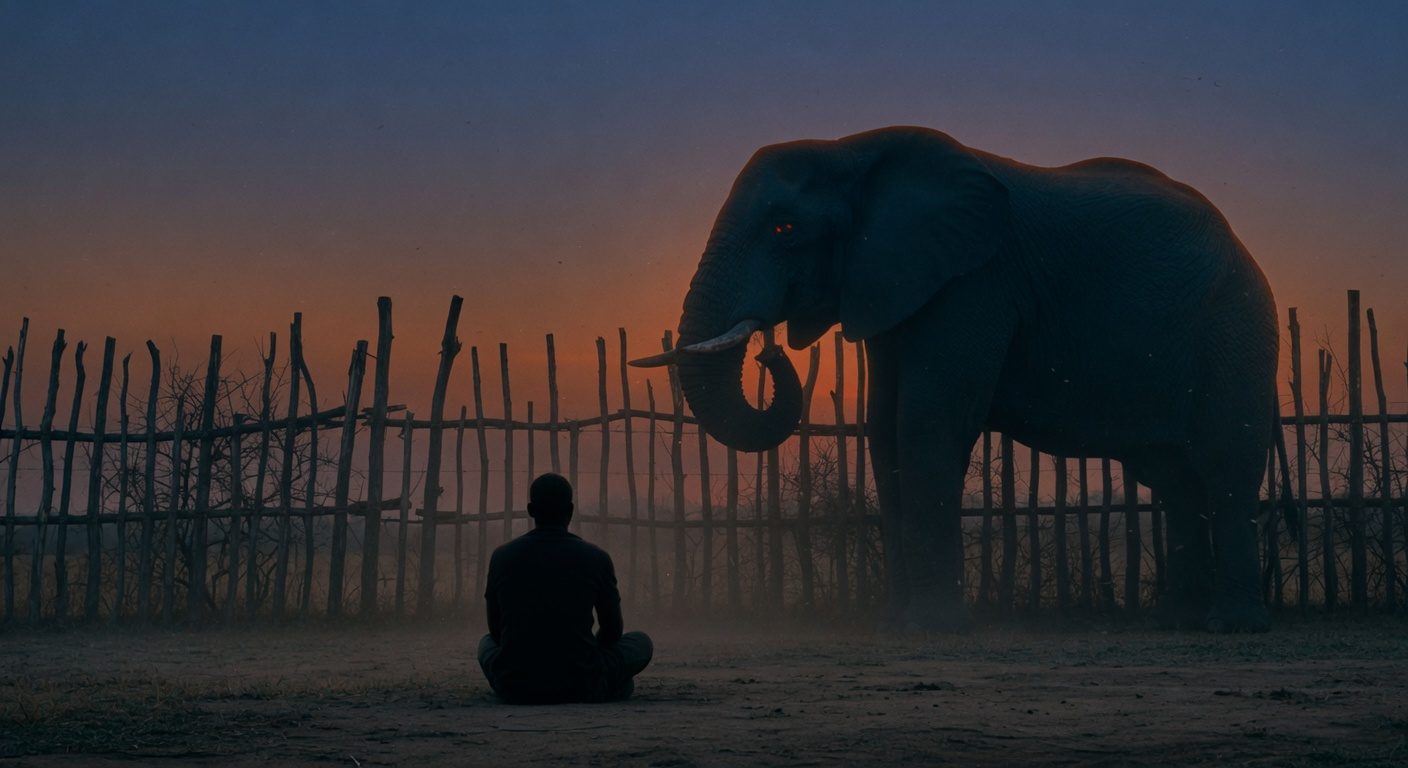
Night after night, he went to the boma — the enclosure where the newly arrived elephants were held — and he sat on the ground outside the fence. He talked to them. Softly. About nothing in particular. Sometimes he sang. Mostly he was quiet.
The elephants, at first, charged the fence when he appeared. Nana, the matriarch, would trumpet and mock-charge, testing whether this human would flinch, run, retaliate.
Anthony did none of these things. He stayed.
What he was doing, though he may not have had the language for it, was a process of subtraction. He was stripping away every signal of threat, dominance, agenda, and fear from his own body until what remained was coherent. His outside matched his inside. There was nothing to detect, because there was nothing hidden.
It took months. But Nana began to approach the fence. Not to charge. To stand near him. To breathe when he breathed.
He did not learn to speak elephant.
He learned to stop lying in a language elephants could read.
Thirteen Years
Over the next thirteen years, the relationship deepened into something that has no adequate name in English.
Anthony could walk among the herd. Nana would greet him by extending her trunk to his face — an act that, among elephants, involves sampling chemical signatures and is reserved for trusted family members. The other elephants followed her lead. Calves were born that had never known a world without Anthony in it.
He was not their owner. He was not their trainer. The closest word might be: recognized.
The elephants had assessed him across every channel they possessed — his scent, his heartbeat, his micro-movements, his behavioral consistency over thousands of encounters across more than a decade — and they had reached a conclusion:
This one is coherent. This one can be trusted. This one is family.
March 2, 2012
Lawrence Anthony died of a heart attack at his home on the Thula Thula reserve. He was sixty-one.
His family began making phone calls. Staff were notified. Arrangements were discussed. The news had not been announced publicly.
And somewhere on the reserve, two herds of elephants began to walk.
The Walk
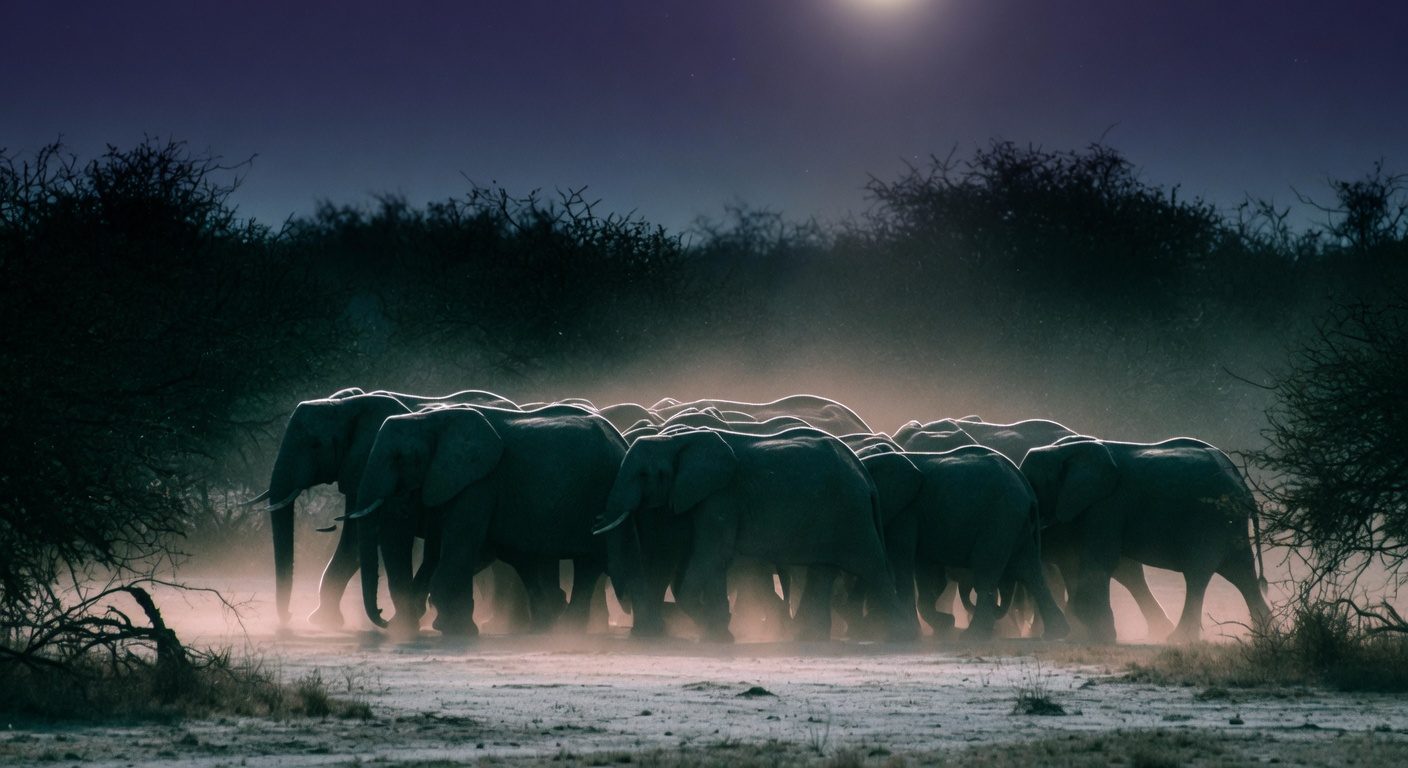
The herds traveled for approximately twelve hours through the South African bush to reach the Anthony compound. They arrived on March 3rd.
What happened next was witnessed and documented by the Anthony family and Thula Thula staff, and subsequently reported by the BBC, The Independent, and numerous other outlets.
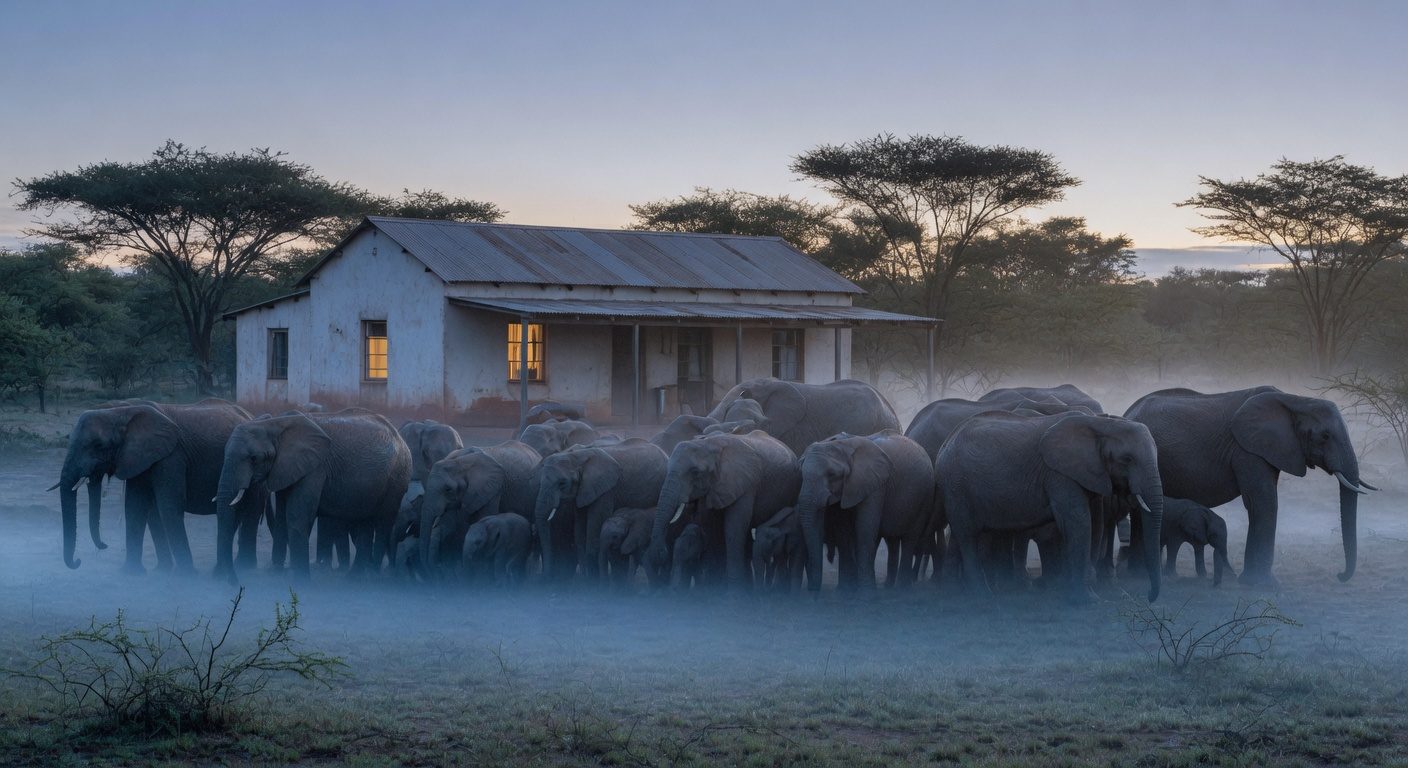
The elephants stood outside the house. Approximately thirty-one individuals from two herds. They did not feed. They did not wander. They stood in what every witness described, without hesitation, as vigil.
They stayed for two days.
Then they turned and walked back into the bush.
They had not visited the compound in over a year before that night. They have not exhibited the same behavior since.
The Question
The question is not whether elephants grieve. That debate was settled decades ago by researchers who documented elephant death rituals, bone-touching ceremonies, and return visits to sites where family members died years before.
The question is: how did they know?
Lawrence Anthony died at his home. The elephants were across the reserve. No staff member went to tell them. No alarm sounded. There was no observable signal — no sound, no smell, no visual cue — that could have traveled from his home to their locations and informed them that one specific human, among all the humans on the reserve, had stopped living.
And yet. Two separate herds. Both started walking. Both arrived at the same destination. Both within hours of his death.
The simplest explanation — coincidence — requires believing that thirty-one elephants from two unrelated herds simultaneously decided to make a twelve-hour journey to a specific house they hadn't visited in a year, all on the same night, by chance.
The harder explanation requires accepting that elephants perceive something we don't.
What They See
What if consciousness isn't a single spectrum with humans at the top — but a space with multiple dimensions?
We excel at one: symbolic intelligence. Language. Math. Planning. The ability to compress the world into abstract tokens and manipulate them. No other species comes close on this axis.
But there is a second axis. Call it coherence perception — the ability to read, in real time, whether a being's internal state matches its external presentation. To detect, across multiple sensory channels simultaneously, whether someone is what they appear to be.
On this axis, elephants are extraordinary. They process chemical signatures, infrasonic frequencies, micro-kinetic cues, and behavioral history in parallel, generating a continuous read on a single question: is this being coherent?
Lawrence Anthony spent thirteen years becoming coherent in a language elephants could verify. When that coherence ceased — when the signal stopped — they knew. Not because someone told them. Because they were already listening.